Immobilized & Imperiled: Crew Safety Endangered in the Wake of Bunker Failures (Case Study)

By Steve Bee: Group Marketing & Strategic Projects Director, VPS  & Captain Rahul Choudhuri: President of Strategic Partnerships, VPS.

During February 2025, a prominent shipowner had one of its vessels bunker 405mt of VLSFO in New York. This case study highlights what happened next and the consequential dangers and costs contaminated marine fuel posed to the vessel, its crew and the owner.  

The bunker was purchased against the ISO8217 specifications, yet the initial VPS laboratory test report, whilst showing the fuel met the ISO8217 specification, also indicated via CGMS-Headspace Screening, the presence of Volatile Organic Compounds (VOCs) in the form of Indene and 4-Methylphenol. Following this finding, a more detailed forensic GCMS-Vacuum Distillation analysis was performed, which identified the presence of a number of chemical compounds not typically associated with marine fuels: 
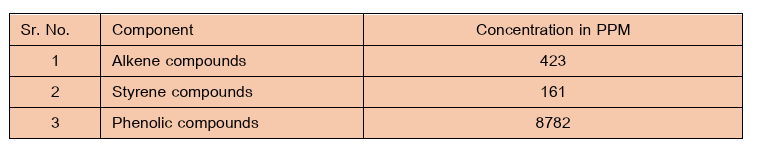
On the 27th February, VPS provided cautionary notes within this GCMS-VD report:

• The Alkene and Styrene compounds were collectively present in substantial concentration and are known to cause sticking and seizure of fuel pumps plunger and barrel. 
• The Phenolic compounds were present in a disproportionately high concentration of 8782 ppm (0.88%). These compounds are known to cause sludge formation in fuel filters / separators and fuel injection issues.

However, despite VPS test results and advisory comments, for numerous reasons, the vessel had no other choice but to begin to use this fuel from 28th February and subsequently struggled to consume the bunker. As the vessel makes frequent calls to ECA-based ports, there is a regular requirement for fuel changeovers to occur, ie from VLSFO to LSMGO and vice versa. However, with this specific VLSFO bunker, the vessel experienced excessive sludge formation in filters and purifiers, which forced the vessel to slow down or stop and perform several cycles of filter and purifier cleaning until the changeover in the system was complete. 

On 3rd May the tank containing the above grade was stripped to allow for the next grade of VLSFO to be used. Within a few hours, whilst the last of contaminated bunkers were being used, all Main Engine plunger barrels seized, the purifiers clogged, and the filters (fine filter / jet filter/ transfer pump filter) were choked. It was noticed that an unusual and excessive plastic-like, hardened sludge, had formed and this inundated the settling / service tanks and sludge tanks. 
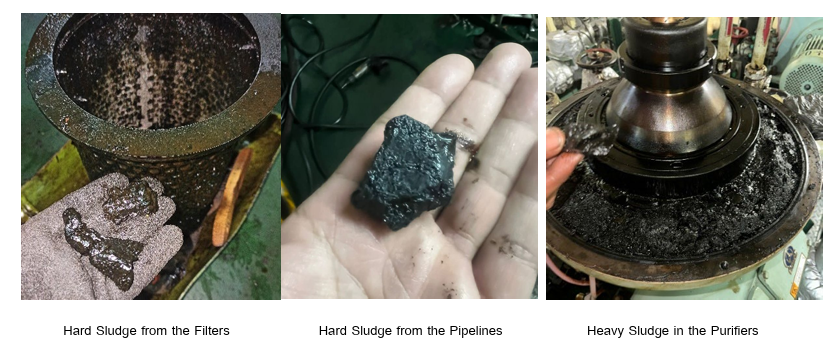
 

The vessel was subsequently without propulsion for over 3 days. It drifted from outside ECA waters close to fixed oil rig structures within the US Gulf region, as it tried to recover from the precarious situation. This posed a significant safety risk to the vessel and crew.

The after effects of this case continued for several days and involved the following:

  • A major emergency alert due to the loss of propulsion, necessitating the involvement of Qualified Individual (QI) , USCG and tugs assistance to be on standby as a contingency measure for mobilisation, if necessary.  
  • Several days of cleaning and clearing of filters/ purifiers/ pipelines and tanks.
  • Severe disruption to the rest hours of the crew with significant overtime incurred. 
  • A financial burden on the owners due to the engagement of various shore workshops to clean sludge and tanks onboard while conducting full manual tank cleaning. 
  • Considerable time and effort in reporting to Authorities, followed by Flag State and USCG Inspections. 
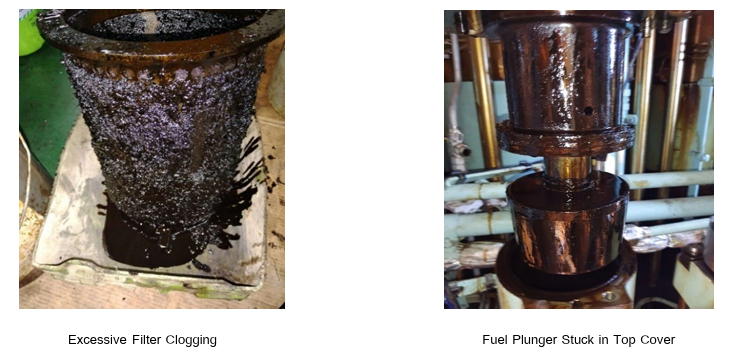


In conclusion,  this case study shows that considerable shipboard damage and work stress can be caused due to contaminated bunkers. It is also worth noting, following the final stripping of the fuel, the situation became even worse, indicating the contamination may well have settled in the lower part of the fuel. However, the far greater risk posed, was one of the safety of the crew and vessel, when the vessel became immobilized at sea due to such a bunker condition. On reflection, the consequences of this could quite easily have been even more disastrous & immeasurable, than they were.

For further information on how the risks associated with chemically contaminated fuel can be avoided, please contact: steve.bee@vpsveritas.com
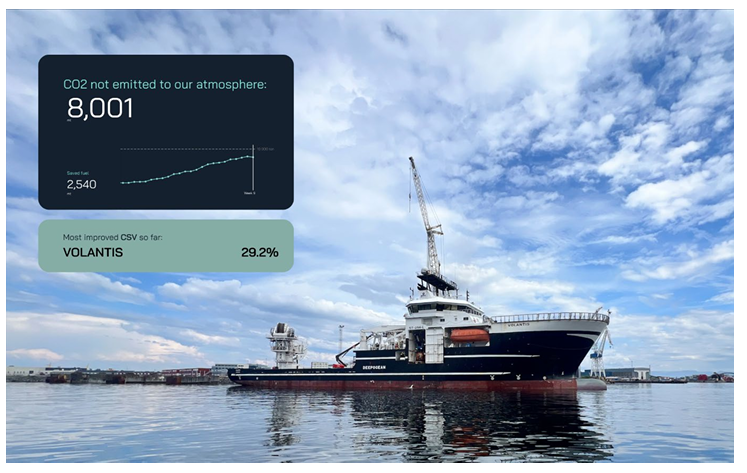


8,000 Tonnes of CO2 Saved so far: VPS Maress Decarbonisation Campaign (Update)

By Emilian Buksak: VPS VP, Digital & Decarbonisation Advisory Services & Iroro Eradajaye: VPS Maritime Decarbonisation Manager.


For the third successive summer, VPS have undertaken its Maress Decarbonisation Campaign. This event, which runs from 1st June-31st August has this year seen 12 offshore companies and 298 vessels participate.

Utilising the VPS Maress software platform to improve overall vessel operation efficiency, reducing fuel consumption and hence reduce emissions.  

With two months of the 2025 campaign now completed, the impact is already clear: the campaign has already helped save over 8,000 tonnes of CO₂ from being emitted to atmosphere. This achievement is a direct result of the consistent, conscious efforts from fleet participants. 
 

A huge thank you to our participating partners: 
Boskalis, bp, Havila Shipping ASA, Havila Subsea & Renewables, Island Offshore, North Sea Shipping, Rem Offshore, Sanco Shipping, Simon Møkster Shipping AS, Skansi Offshore, Solstad, Tidewater

As we enter the final month we are encouraging every vessel to carry this momentum forward and finish strongly! 

The Current Leaderboard 
The current leaderboard after two months is shown below, but with one month to go, vessels still have the opportunity to climb this table: 


Vessel Spotlight: Volantis - Havila Subsea & Renewables 
We would like to highlight the vessel, Volantis, a CSV operated by Havila Subsea & Renewables, and its dedicated crew.

Throughout the campaign Volantis spent ~75 % of her days in DP or Transit, modes that account for >85 % of total fuel use. Yet the crew still delivered significant savings through relentless, real‑time optimization. 

“We’re always chasing the next increment. There’s a continuous dialogue between bridge, engine room, charterer and shore management on how to do better. During transits we agree an economical speed window with the client, then run only the engines and thrusters we need - each kept in its sweet‑spot load range.” 
— Master, CSV Volantis 


What moved the needle? 
1. Continuous dialogue with the charterer → minute-by-minute adjustments to speed and schedule, supported by live weather data. 
2. Power‑generation optimization → not just the right number of engines online, but each one loaded for peak efficiency. 
3. Weather‑aware voyage planning → optimal speed profile that balances ETA, fuel burn and sea state.

Congratulations to the Volantis crew – so far your collaboration and focus has truly embodied the spirit of this campaign! There will be a final update upon completion of the 2025 campaign in early September.  

For any shipping companies and their vessels interested in joining next year’s Maress Decarbonisation Campaign please contact: decarbonisation@vpsveritas.com


Global High Cat-fines Levels

A Global Pandemic of High Catfines in Marine Fuel

By Steve Bee – Group Marketing & Strategic Projects Director


Between the 11th-31st August 2025, VPS, through its fuel quality testing service, witnessed a high number of elevated catfine levels in Very Low Sulphur Fuel Oils (VLSFO) across East Coast USA, Singapore, Rotterdam, Hamburg, Algeciras and Port Louis. This resulted in the release of seven VPS Bunker Alerts covering that time period.

Catfine levels ranged from 62ppm to 176ppm across the globe.

The high catfine levels across the East Coast USA, mainly Boston and New York, came from fuel delivered by a single supplier, with levels ranging from 70ppm-176ppm.

In Singapore, catfine levels ranged from 67ppm-156ppm, with fuel delivered from four suppliers.

Whilst in Algeciras, fuel from two suppliers ranged between 61ppm-92ppm. Three fuel suppliers in Rotterdam delivered fuel containing catfines between 61-78ppm and in Hamburg, two suppliers delivered fuel with catfine levels between 62ppm-66ppm.

Finally, Port Louis had three suppliers delivering fuel containing 63-65ppm catfines.

Elevated amounts of these highly abrasive particles cause accelerated wear of diesel engine components, such as piston rings, cylinder liners and fuel pumps, if not reduced to acceptable levels.  

Ships receiving high Al+Si (catfines) fuels are recommended to take Fuel System Check samples to assess the fuel treatment efficiency and to know the fuel oil quality at the engine inlet. This will help in any subsequent assessment of increased engine wear and damages, and in resolving fuel quality disputes.

In addition, for lubricating oils it is recommended that PQ Index analysis is undertaken for cylinder scrape-down analysis, as any result above a reading of 50, would indicate abrasive wear, as would an iron reading above 200ppm.

VPS laboratories and regional offices span all time zones and can assist you with further commercial and technical advice if required.  

For further clarifications email us at technical@vpsveritas.com or speak with your Account manager.


VPS Maress Decarbonization Campaign Successfully Concludes

2025 Maress Summer Decarbonization Campaign Successfully Concludes !!!

Over 90 days (June-August), more than 300 vessels from 12 leading shipping companies, using the VPS Maress software platform, joined forces to test, learn and innovate, in respect to improving vessel operational efficiencies and reducing fuel consumption, without compromising safety.

This VPS campaign offered the opportunity and freedom, for crews to trial new strategies, measure their outcomes and push performance to new levels.

The results speak for themselves:
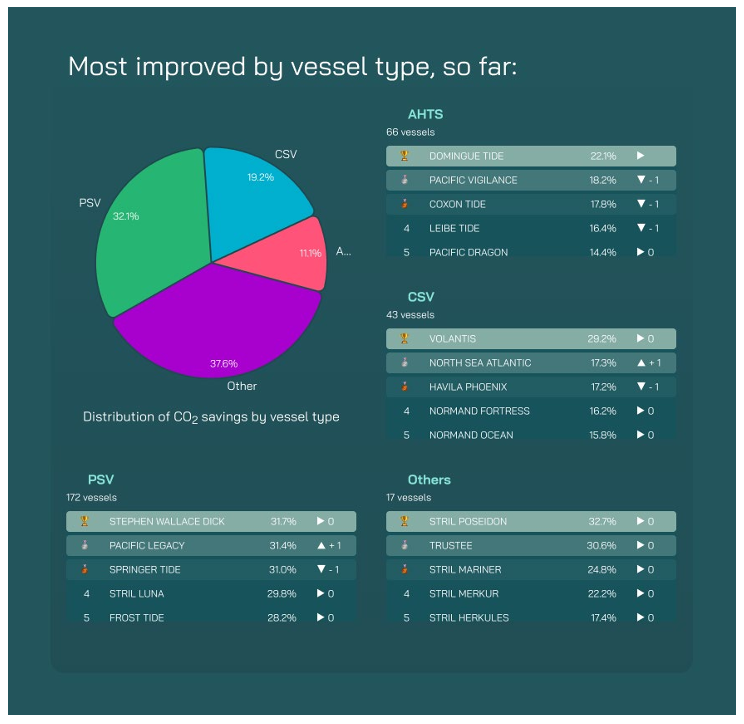
Overall the fleet saved approximately 12,000 metric tons of Carbon Dioxide emissions to atmosphere over three months. On average the participating vessels improved their efficiency by more than 10%. That kind of progress doesn't happen by chance - it is the result of practice, dedication and crews continuously refining how they operate.

Congratulations to this year’s top-performing vessels:
DOMINGUE TIDE (AHTS) – Tidewater
VOLANTIS (CSV) – Havila Subsea & Renewables
SPRINGER TIDE (PSV) – Tidewater
STRIL POSEIDON (Others) – Simon Møkster Shipping

While these vessels take home the trophies, every participating crew deserves recognition. This 3rd VPS annual campaign has further demonstrated what is possible when the industry collaborates, shares experience and turns ideas into measurable results.

For more information, visit the campaign dashboard: https://app.maress.no/en/summercampaign

Thank you to our participating partners:
Boskalis, bp, HAVILA SHIPPING ASA, Havila Subsea & Renewables, Island Offshore, North Sea Shipping, Rem Offshore, Sanco shipping, Simon Møkster Shipping AS, Skansi Offshore, Solstad, Tidewater

Are you interested in joining the 2026 Maress Decarbonization Campaign?
Contact us at decarbonisation@vpsveritas.com

VPS Greece Team Triumph in Serifos Charity Running & Swimming Event

Last Weekend members of the VPS-Greece team participated in the Serifos 5K and 10 K Sunset Road Races and 1500m open sea swimming race.

The Serifos races were again the Ambassador of the "Sea-Change Greek Islands" programme of the Athanasios Laskaridis Charitable Foundation. In collaboration with the ALC Foundation, environmental and educational actions were carried out on the island during the event.

The Athanasios C. Laskaridis Charitable Foundation was established in 2015 in order to act as a catalyst for important issues concerning the protection of the marine environment, among other valuable, important causes concerning Greece and Hellenism.

Congratulations to VPS Customer Service Coordinator, Penny Theologi, for winning the Gold Medal in the 1500M age group Open Water Swim Race, plus Team VPS-Greece members, Dafni Lionaki, Kalliopi Plexida, Androniki Vouza and Vasilis Koutsoumaris for their heroic road race achievements.

VPS-Singapore Host a Hugely Successful Maritime Decarbonization Seminar

The VPS Maritime Decarbonization Seminar held at the Amara Hotel, Singapore on 18th September attracted 90 delegates. 

Presentations from VPS and RINA, were followed by a very lively Panel Session, covering a wide range of topics, including Biofuels, Off-Specification Fuels, the role of the Bunker Alert, Crew Training for new fuel usage, Procurement Platforms, plus the role of Intertanko and Classification Societies.

VPS was represented by Captain Rahul Choudhuri, President of Strategic Partnerships and Andrew Morton, Managing Director AMEA. Our guests, to who we offer sincere thanks for their participation were, Jan-Paul de Wilde, (Head of Decarbonization, RINA), Prapisala Thepsithar, (Director, Projects, GCMD), Kai Cheong (KC) Wong (黃启祥), (Senior Technical Manager, Intertanko), Anubhav Garg, (MD, NYK SM), Kasper S. Soerensen (Head of Marine Fuel Sourcing East, Seascale Energy), and Elane Ng, (Senior Manager, Standards Development Organisation, SDO@SCIC).

VPS would also like to thank all of the delegates who attended and made the event the success that it was.

VPS Launch New Digital Platform: Verisphere

VPS announce the official launch of its latest digital platform, VeriSphere. An ecosystem initiative and digital marketplace to enable seamless, secure and easy access to digital solutions across the marine fuels & emissions value chain.

With VeriSphere, a selection of digital solutions (incl. software, hardware, data and AI) from VPS and its partners are connected through a single, intuitive environment, unifying the application landscape for marine fuels & emissions. These tools can support and improve, bunker fuel procurement and management, optimize fuel and lubricating oil consumption and fleet performance, monitor main engine and emission equipment performance, simplify MRV delivery and support the planning of decarbonisation pathways.

VeriSphere’s modular design and persistent identity management, means users can move effortlessly between apps without the hassle of dealing with multiple accounts.

"Digital tools should empower the user, not complicate their work," said Jan Wilhelmsson, COO Digital & Decarbonisation at VPS. "Too many times we hear our customers say that they are tired of all the different user interfaces they have to master in order to do their daily work. VeriSphere solves this problem, by providing an intelligent, connected and easy-to-use platform that gives our customers the freedom to focus on executing their mission.”

To find out more about VPS VeriSphere contact dataservices@vpsveritas.com


Propelling the Future - VPS Round Table Meeting Series

On the 8th November 2025, VPS held its first European Round Table Meeting seminar of 2025 in Hamburg.

The event included topics covering numerous maritime decarbonization subjects, provoking insightful discussions between presenters and delegates alike, with the goal of providing valued information to support decarbonization strategies.

VPS presenters, John MacKenzie, (Commercial Director-Europe), Wolf Rehder (Account Manager) and Thomas Schmidt (Account Manager), were joined by guest presenters, Timo Lacinski (Project Manager, Wilhelm Rump KG) and Hesham Nasr (Green Fuels Business Development Manager, Hapag Lloyd).

VPS would like to sincerely thank our guest presenters and all the delegates who attended the event. Thank you and hopefully see you at next year's event.

VPS 2nd European Round Table Meeting - Athens 4th November

The 2nd VPS European Round Table Meeting will take place in Athens, on Tuesday 4th November. Entitled, "Propelling the Future: Maritime Decarbonization Challenges", the event will include presentations from, Steve Bee-VPS Group Marketing Director, John MacKenzie - VPS European Commercial Director and Remco de Witte - Global Application Manager, HSS Fuel & Lube, Alfa Laval Technologies. 

This insightful seminar, will look into the evolving low-to-zero carbon fuel landscape, the impact of decarbonization on marine lubricants, the future of biofuel usage onboard vessels and the advances in digital data platforms for implementing effective decarbonization strategies.

Register for this free-of-charge event at: piraeus@vpsveritas.com

The venue for the event: The Grand Hyatt Hotel Athens, Andrea Siggrou 115, Athens 117 45
 

VPS 3rd European Round Table Meeting - Oslo, 12th November

Join us for an insightful session where we will dive deep into the evolving landscape of low-to-zero carbon fuels, including options such as FAME, HVO, CNSL, as well as emerging alcohol fuels, Methanol and Ethanol. In addition, we will highlight the impact of maritime decarbonization on lubricating oils. Our experts will then provide the latest updates on the advances in digital data platforms and maritime decarbonization legislation to further discuss and share best practices for navigating fuel procurement and implementing effective decarbonization strategies tailored to your fleet.

Register for this free event at : oslo@vpsveritas.com 

Venue: Spaces Aker Brygge 4th Floor, Fjordalleen 16, 0250 Oslo

Ensuring Transformer Reliability: The Critical Role of Pre & Post-Energisation Oil Checks

By James Robinson – Business Manager, VPS Power.


This paper explores the importance of transformer oil testing before and after energisation of new assets going into service. It highlights key diagnostic methods, their role in operational reliability, and how they align with insurance and warranty requirements. By implementing a structured testing regime, asset managers can mitigate risks, extend transformer life, and ensure compliance with industry standards.

1. Introduction
Transformers are critical assets within power systems and their reliability hinges significantly on the condition of their insulating oil. Transformer oil serves not only as an insulator, but also as a coolant. Over time, its properties can degrade due to thermal, electrical, and chemical stresses. Pre- and post-energisation checks for new assets going into service are essential to ensure the oil has maintained its protective qualities and there are no thermal or electrical faults before and soon after energisation. These checks are not only best practices and recommended by international standards, but are often mandated by insurance and warranty agreements.

2. Technical Recommendations and Standards Compliance
Transformer oil testing must align with international standards to ensure reliability, safety, and compliance with insurance and warranty requirements. The following recommendations are based on current IEC standards and industry best practices:

2.1 Classification of Oil Use
Once insulating oil has come into contact with internal transformer materials, it can no longer be classified as ‘unused.’ This distinction is critical for interpreting test results and determining maintenance actions.

2.2 IEC 60422:2024 – Mineral Insulating Oils
Table 3 of IEC 60422:2024 outlines recommended limits for mineral insulating oils after filling new electrical equipment, prior to first energisation. It categorizes transformers by voltage class:

<72.5 kV, 72.5 to 170 kV, >170 kV

Recommended tests include:
- Appearance
- Breakdown voltage
- Water content
- Acidity
- Dielectric Dissipation Factor (DDF) at 90°C
- Interfacial Tension (IFT)
- Potentially corrosive sulphur and corrosive sulphur
- Dibenzyl disulfide (DBDS)
- Total PCB content

2.3 IEC 61203:2025 – Synthetic Esters
Table 3 of IEC 61203:2025 outlines recommended limits for synthetic ester insulating fluids after filling new electrical equipment, prior to first energisation. It categorizes transformers by voltage class:

<72.5 kV, 72.5 to 170 kV, >170 kV

Recommended tests include:
- Appearance
- Breakdown voltage
- Water content
- Acidity
- DDF at 90°C
- Fire point
- Particles
- Total PCB content

2.4 IEC 62975:2021 – Natural Esters
Table 3 of IEC 62975:2021 outlines recommended limits for natural ester insulating fluids after filling new electrical equipment, prior to first energisation. It categorizes transformers by voltage class:

<72.5 kV, 72.5 to 170 kV, >170 kV

Recommended tests include:
- Appearance
- Breakdown voltage
- Water content
- Acidity
- DDF at 90°C
- Density at 20°C
- Viscosity at 40°C
- Fire point and flash point
- Total gas content (for hermetically sealed transformers)
- Total PCB content

2.5 Additional Recommended Tests
While not listed in the IEC standards, it is advisable to include:
- 2-Furfural and Estimated Degree of Polymerisation (DP)
These tests provide insight into paper insulation ageing and transformer life expectancy.

2.6 Pre-Energisation Testing Strategy
To establish a reliable baseline, it is recommended to perform all tests listed in the relevant standards. However, customers may choose a subset based on their risk tolerance and operational requirements. At a minimum, VPS Power recommend the following should be conducted:
- Dissolved Gas Analysis (DGA)
- Fluid assessment (Visual Appearance, Acidity, Water content & Breakdown voltage)
- Furfural and Estimated Degree of Polymerisation (DP)

2.7 Post-Energisation Monitoring Schedule
After the initial sample is approved:
- 24 hours after energisation (no load): DGA and Fluid assessment
- 48 hours after load operation: DGA and Fluid assessment
- Quarterly during the first year: DGA and Fluid assessment
Customers may opt for additional interim samples between the 48-hour and first-quarter intervals.

2.8 Custom Limits
Some customers may define their own acceptance criteria, which may be more, or less, stringent than IEC recommendations. These should be documented and agreed upon prior to commissioning.

3. Conclusion
Routine transformer oil testing—both before and after energisation—is a cornerstone of effective asset management. It ensures operational reliability, supports compliance with industry standards, and fulfils insurance and warranty obligations. By adopting a proactive approach, utilities and industries can safeguard their investments and maintain uninterrupted service.

Dissolved Gas Analysis (DGA) is a cornerstone diagnostic tool that identifies fault gases generated by thermal and electrical stresses within the transformer. Key gases include hydrogen (H₂), methane (CH₄), ethylene (C₂H₄), ethane (C₂H₆), acetylene (C₂H₂), carbon monoxide (CO), and carbon dioxide (CO₂). The presence and ratios of these gases can indicate fault types such as partial discharge, overheating, or arcing. IEEE C57.104 and IEC 60599 provide interpretation guidelines.

Post-energisation DGA helps detect early operational faults such as gassing due to load-induced thermal stress. Comparing gas levels to pre-energisation baselines allows for trend analysis and early intervention.

Fluid assessment includes visual inspection for clarity and contamination, acidity measurement to detect oil oxidation, water content analysis (Karl Fischer method) to assess moisture ingress, and breakdown voltage testing to evaluate dielectric strength. Elevated acidity and moisture reduce insulation performance and accelerate ageing. Fluid assessment post-energisation confirms that oil properties remain within acceptable limits under operational conditions.

2-Furfural and Estimated Degree of Polymerisation (DP) are critical indicators of the ageing condition of cellulose-based insulation in transformers. Furfural is a by-product of paper degradation, and its concentration in oil correlates with the extent of insulation deterioration. The Degree of Polymerisation (DP) measures the average length of cellulose chains, with lower values indicating more severe ageing. A DP below 200 typically suggests end-of-life for insulation, while values above 800 indicate healthy paper condition. These metrics help asset managers estimate remaining transformer life and prioritize maintenance or replacement.

Furfural and DP testing should be conducted using High-Performance Liquid Chromatography (HPLC) to provide a baseline for insulation health before energisation.

Custom limits may be based on historical performance data, transformer design specifics, or criticality of the asset. For example, a utility operating transformers in high-humidity environments may adopt stricter water content thresholds. These limits should be documented in asset management plans and integrated into commissioning protocols.

Quarterly monitoring during the first year is essential to capture any latent issues that may arise from installation defects, material incompatibilities, or environmental factors. Trending data over time supports predictive maintenance strategies.

For further information and support regarding transformer oil testing, please contact: james.robinson@vpsveritas.com


The Cost of Caution in 2-Stroke Cylinder Lubrication

By Joe Star – VPS Strategic Account Manager.


The Role of Cylinder Oil
More than 90% of global freight is transported by over 33,000 merchant marine vessels powered by two-stroke crosshead engines as their main source of propulsion; the two-stroke diesel engine has been the backbone of global trade and globalisation for well over half a century. Among one of the key factors supporting the reliability and uptime of these engines, keeping trade moving, is the effective performance of cylinder oil. Often referred to as the lifeblood of the engine, these oils provide critical protection to avoid abrasive, adhesive or corrosive wear from occurring within the engine; whilst maintaining a clean environment free of deposits.

Key Responsibilities of a Cylinder Oil:
•    Provide a full and stable oil film throughout the cylinder liner surface to minimise adhesive wear and metal-to-metal contact.
•    Provide corrosion resistance within the cylinder, through neutralising the sulphuric acid formation which occurs within the combustion chamber.
•    Minimise deposit formation on piston rings and liner surfaces, by providing detergency to remove particulates and preventing the build-up of hard deposits in key component areas.

Prior to the introduction of Emission Control Areas (ECA’s) and more advanced engine designs coming to market, (designed to cater for increased pressures and temperatures, maximising thermal efficiency), the cylinder oil landscape was largely static, and performance priorities were clear. SAE 50 oil viscosity, provided the optimum film and hydrodynamic lubrication properties, whilst Base Number (BN) 70 provided sufficient neutralisation and detergency properties.

Over the last 20 years, the rapid development and introduction of differing cylinder oils has led to increased complexity onboard. The 2020 Sulphur Cap reset much of this complexity, with the industry and Original Equipment Manufacturers (OEM’s) standards coalescing on 40BN as the optimum for non-scrubbed vessels and a wide range of fuels, with some oil formulations including neutral detergency to boost clean performance.

More does not mean greater reliability
With vessel operations being far reaching and extensive, consistent reliability is paramount, from both a time and resource perspective and in ensuring an asset is maximising its earnings potential. A stable and proactive reliability strategy allows for additional initiatives to be progressed, in place of one which is reactive to reliability-based events. Due to this, there may be the viewpoint to increase the amount of cylinder oil used to further promote reliability and avoid any unforeseen lubrication issues that can be costly. As reported by the Swedish Club, the most frequent causes of main engine damage are lubrication related issues.

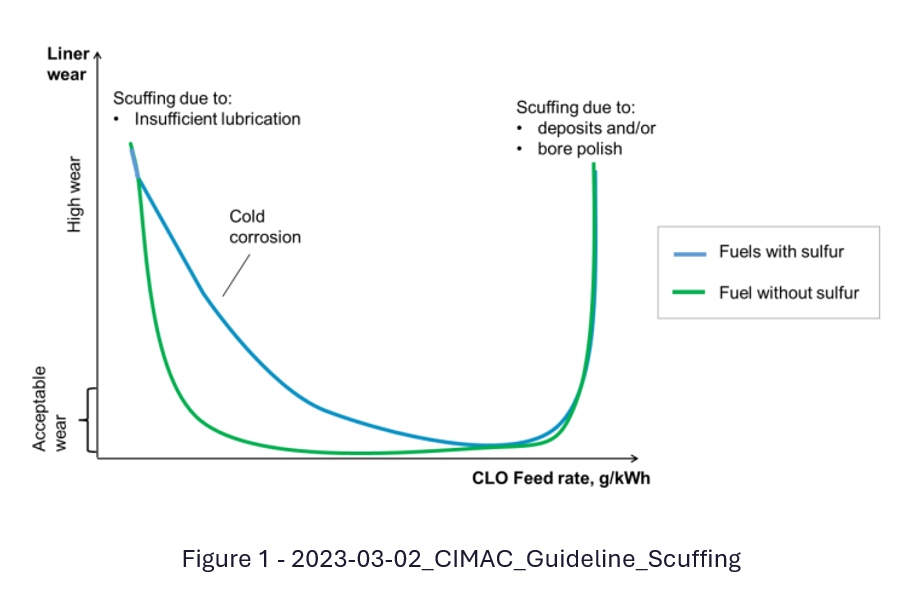
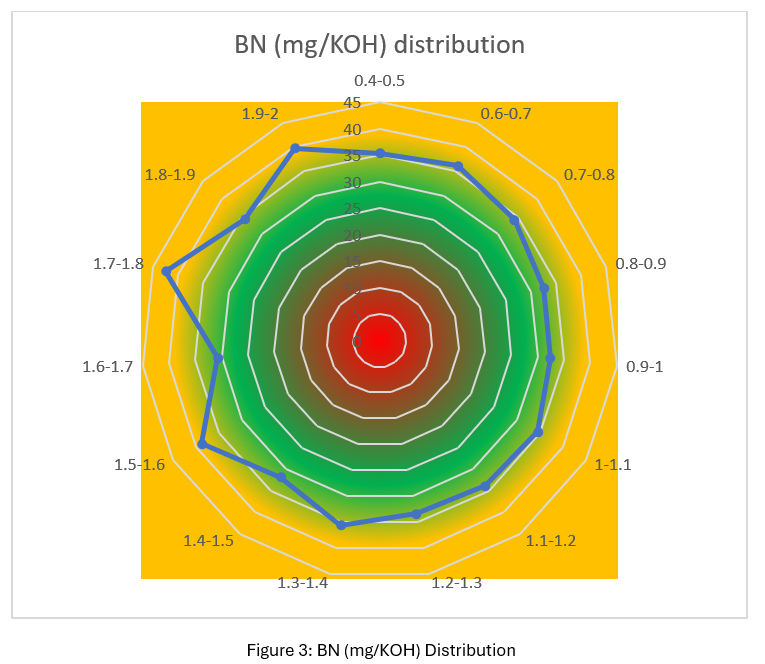
However, additional cylinder oil within the system, not only represents a hidden cost to enhance reliability, but can also lead to significant reliability related issues which occur and manifest over time. Additional lubricant additives that are designed to react with Sulphuric Acid within the engine, can form hard deposits on piston rings, and in extreme cases polish the cylinder liner surface. This leads to scuffing, or engine seizing, due to future lubricant injections being unable to maintain the film thickness and distribution required within the engine. The key indicator of potential over-lubrication in this instance, is the lack of depletion of Base Number when compared to the fresh Base Number of the cylinder oil in use. Note, OEM’s recommend a safe level to be in excess of 10-15mg/KOH for the majority of cylinder oil and fuel combinations in use, with both Everllence and WinGD recognising the dangers that over-lubrication can bring.

Feed-Rate reality post IMO 2020
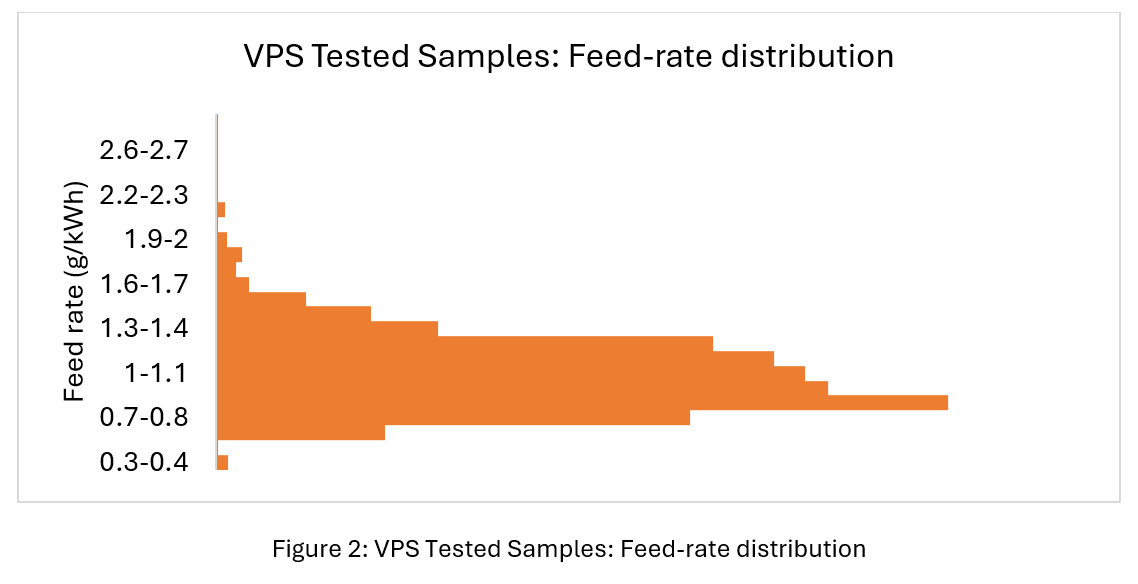
Leveraging VPS’ extensive database of oil analysis results gathered from a range of vessels and operating conditions, the average feed rate onboard during 2025 is currently 1.05g/kWh. This is over 35% higher than Everllence (MAN ES), and WinGD’s recommended minimum feed rate for routine engine operation. The vast majority of samples continue to show close to fresh BN levels for those vessels using 40BN products onboard, with BN levels routinely ranging up to 75BN for higher BN products used in conjunction with HSFO bunkers.

For majority of the merchant fleet, the potential prize in optimising lubricating oil feed rates to account for the fuel’s lowering sulphur content, (due to the IMO2020 global sulphur cap of 0.50%), has never been more apparent; particularly in a volatile Group I base oil environment that leads to dynamic cylinder oil pricing. 

As previously mentioned, elevated and consistent results reporting low total Iron (Fe) content as an indication of mechanical and corrosive wear, coupled with BN results in excess of 20mg/KOH, provide a platform for vessels to iteratively reduce feed rates based upon ongoing onboard quick monitoring, and detailed lab analysis. Scenarios will continue to exist where feed rates should be temporarily elevated, such as the running-in of engine components, or cylinder liners. However, these should be on a temporary basis, following OEM guidelines and reverting once wear metals are within limits. A review of VPS’ database shows substantial optimisation potential to reduce the global fleet’s BN and subsequent cylinder oil consumption, with BN levels across the fleet falling on the higher side.

By taking a structured approach in reviewing laboratory analysis data, coupled with the gathering of operational data onboard, vessels should look to progress through a stepped feed-rate reduction and optimisation programme. This will rely upon the accuracy and repeatability of laboratory results in order to reduce feed rates until BN, Iron, or feed-rates, achieve the relevant OEM limits. Not only will this provide near-term, realised direct Opex savings, but also potentially increase the operational uptime of a vessel, through:

1.    Minimising the risk of alkali-based deposit build-up around piston rings
2.    Initiate the potential for reduced cylinder oil bunkering stops 
3.    Reduce the time spent to pump-off oil slops generated through excess scrape-down oil usage

Based upon the average vessel profile currently consuming BN40 product, this could generate consumption savings in excess of 25,000 Litres of cylinder oil per vessel per year.

Looking Ahead
Some of the regulations impacting cylinder lubrication are already in place, ie, reduced sulphur content within marine fuel; ongoing engine developments and the introduction of future fuels, all of which make cylinder lubrication a dynamic space. Ultimately, engine designers will continue to push the limits of physics and chemistry to achieve as much thermal efficiency and subsequent fuel savings as possible, with effective cylinder oil control playing a key role. As sulphur content primarily becomes less of a concern, the need for non-based detergency within cylinder oils will be key to ensure the combustion chamber is kept clean of deposits. This coupled with the increased pressures within the engines, there is the expectation that cylinder lubrication will continue to become more advanced, yet remain the lifeblood of the engine.

Just as a blood test provides an indication of the overall health of an individual, the detailed sampling of cylinder scrape-down material will remain critical to engine health. Both in the near term, capturing efficiency and effective cost control; and the long term, in ensuring reliability trends and wear protection of the engine is effective.

The slow-speed crosshead diesel engine has been a mainstay of marine propulsion for over half a century. This will no doubt continue, even as new fuels and dual fuel engines come to market, with supporting cylinder oil and its thorough laboratory monitoring, playing a vital part in keeping propellers turning.

For further information and support regarding marine lubricating oil testing and Oil Condition Monitoring, please contact: joe.star@vpsveritas.com