The IMO's Net Zero Framework has been delayed, but for Vessels under FuelEU & ETS, the Challenge is Now

The decision made during the MEPC meeting in October 2025 to delay the IMO’s Net Zero Framework, by one year, has caused waves across the shipping industry, generating opinions and comments from many industry stakeholders. As a consequence of this decision, it is ever more likely that it will give rise to more regional legislation and Emission Trading Schemes, which may come to the fore as a substitute for the delayed global IMO Net Zero Framework.

With this in mind, the EU ETS, which was originally deemed a transitional legislation, may now become much more relevant as a leading example of an ETS, for other regions to follow.

Whilst so much focus has been placed on the latest MEPC decision and what impact it may have upon global shipping’s decarbonization efforts, it seems many may have missed further important developments within the EU, under FuelEU and ETS.

On 8 October 2025, the European Commission released its Guidelines for Reporting and Verification of Actual Methane Slip Factors. For the first time, shipowners can replace conservative default methane values with measured data, verified in accordance with IMO Resolution MEPC.402(83).

The current FuelEU default tables cover CO₂ only. They do not include methane slip (CH₄) or nitrous oxide (N₂O) factors for most new, or renewable fuels, such as:

  • Bio- and e-methanol
  • Ammonia
  • Hydrogen and other RFNBOs
  • Dual-fuel engines (where N₂O formation can be significant)

This means that without measured data, these fuels are not yet fully creditable or verifiable under FuelEU or ETS. In practice, this could lead to under- or over-reporting of GHG intensity and exposure to higher emissions costs.

However, there is a solution, as the IMO MEPC.402(83) defines how to measure both methane (CH₄) and nitrous oxide (N₂O) onboard, whilst the EU Guidelines (Oct 2025) define how to report verified CH₄ factors under FuelEU, with N₂O procedures expected soon. The technology to continuously measure and verify, CH4, CO2 and N2O, already exists. VPS Emsys can undertake these tasks and correlate these gaseous emissions with engine load, automatically building a verifier-ready Methane File.

It is so important for shipowners and operators to act now as from 2025, voyages which will fall under the EU ETS 2026 cycle, will see  all combustion-related GHGs, (CH4, CO2 and N2O), priced and verified. At present  FuelEU does not provide any default methane or nitrous oxide factors for new fuels, yet only measured values can truly provide accurate GHG accounting and lower ETS exposure.

VPS EMSYS provides the measurement framework today, fully aligned with IMO 402(83) and future-proofed for upcoming FuelEU verification.

The framework is here. The tools exist. What remains is to measure now.


For further information on how VPS can assist you in your FuelEU and EU ETS compliance, plus provide further information on the value and benefits Emsys can deliver, please contact: Emilian.buksak@vpsveritas.com

VPS Launches Maress 2.0 - The Next Generation Maritime Performance Platform

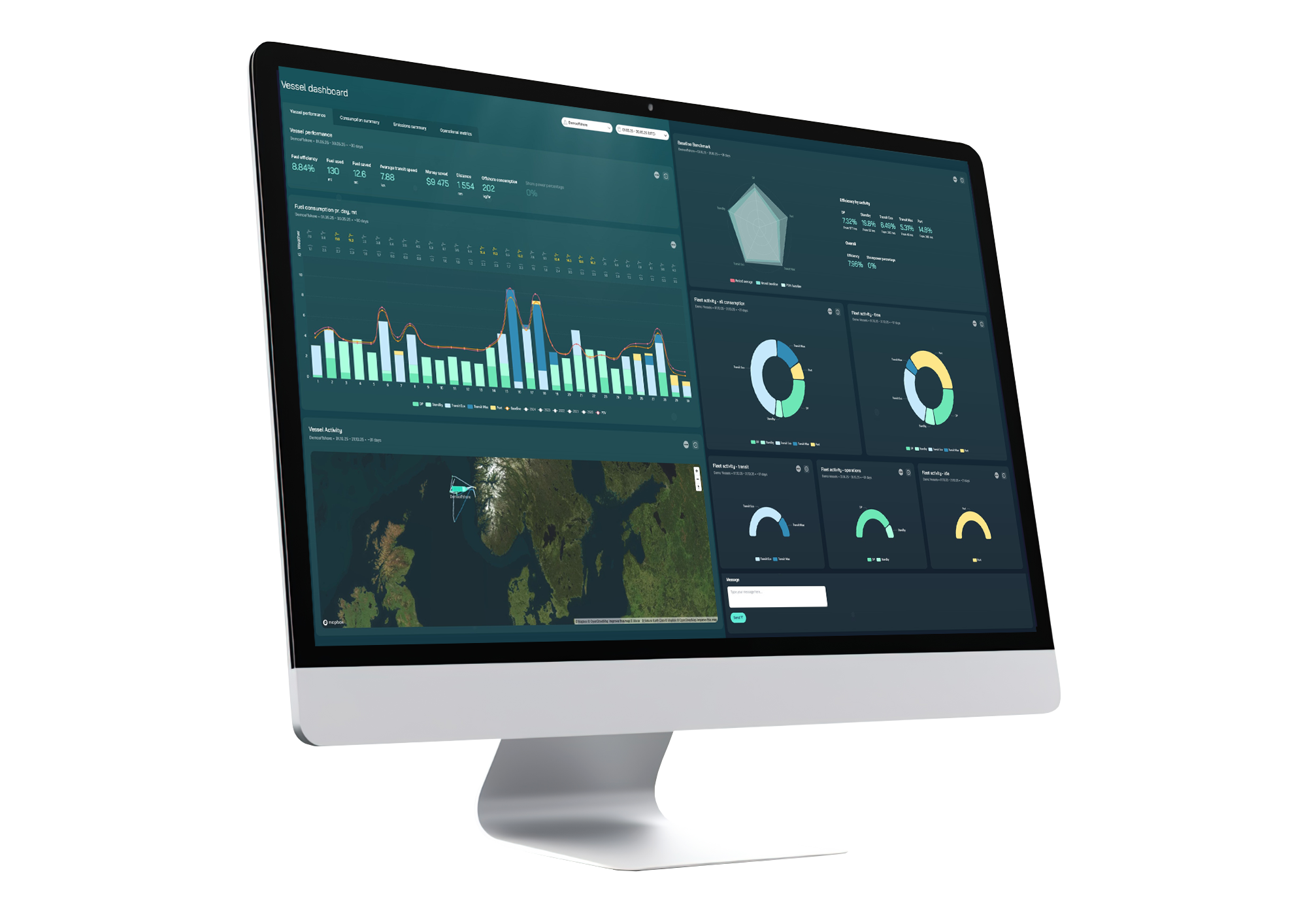
Oslo, 3rd December, 2025 - VPS, the global market leader of marine decarbonization testing and advisory services, has officially launched the latest update of its digital data-driven decarbonization platform, Maress 2.0.

Already trusted by almost 700 vessels, Maress monitors main engine and emissions equipment performance for offshore vessels. Now this new version of Maress offers greater speed, clarity and even smarter decision-making capabilities. With powerful new analytics, high-resolution vessel insights and an intelligent data validation engine, Maress 2.0 helps its users sail smarter, improve their vessel and fleet performance and trust their data like never before.

Maress 2.0 is now a more powerful performance platform designed to give users actionable insights at every level, from fleet wide trends, to the performance of individual thrusters. With this new Maress platform, users can instantly compare vessels, or track a single vessel’s progress over time, helping identify opportunities for efficiency and cost savings. Integrated data validation and smart notifications ensures vessel data remains trustworthy. This enables proactive responses to issues, before they impact operations or compliance.

Key Maress 2.0 highlights include: 

  • Improved analytics and reporting with flexible time-period comparison
  • Integrated daily weather insights directly on the map view
  • Year-on-year baseline comparisons to measure the impact of initiatives
  • Support for alternative fuels, including biofuels
  • Voyage replay with weather, activities and efficiency indicators
  • New Data Quality & MRV Validation module for trustworthy data
  • Advanced Energy Analytics (Add-on) for deeper insight
  • Future-proof architecture with an adaptive new user interface

Designed to connect the offshore ecosystem, Maress 2.0 gives owners, managers, operators and charterers, clear visibility from fleet trends to thruster level detail providing actionable insights that improve efficiency, compliance and cost savings.

With Maress 2.0, we’re strengthening a platform already used by nearly 700 vessels and connecting the Offshore Eco system worldwide,” said Jan Wilhelmsson¸ COO Digital & Decarbonisation, VPS. “This release delivers smarter analytics, cleaner data and a future-proof design that helps our customers sail smarter and perform better with confidence.”

Data quality has never been more critical for vessel owners. Without knowing the quality of vessel data, one can’t trust the insights, or the decisions based upon them. Maress 2.0 automatically validates all incoming data and alerts crews with personalized notifications whenever anomalies are detected. This helps prevent potential costly mistakes, such as submitting MRV/DCS reports based on inaccurate information.

To request a demonstration of Maress 2.0, or any further queries please contact: decarbonisation@vpsveritas.com


VPS "BQS-MFM" Bunker Fuel Delivery Training: Rotterdam

This week, VPS Bunker Quantity Surveyors received further training in Rotterdam from Metcore in relation to the fundamentals and best practices of Mass Flow Meter (MFM) system operations. The training covered in-depth classroom session to on-barge training and explored how data integrity, compliance, and real-time monitoring are driving the future of bunker quantity surveying.

Key Highlights:
1) VPS-Metcore Framework Agreement – part of an expertise exchange initiative;
2) MFM System Principles & Guidelines – aligned with relevant industry standards;
3) Strengthening MFM System Knowledge – understanding system fundamentals & best practices;
4) Effective Bunker Surveying – applying best practices for MFM measurement;
5) Onboard Training on Victrol’s operated barge, Antwerpen – hands-on experience in action.

VPS would like to thank both Metcore International Pte Ltd and Victrol in providing the perfect content and setting for this training. This collaboration reinforces our shared commitment to raising industry standards and ensuring measurement integrity.

From Regulation to Reality: Fuel Assessment Update of the Mediterranean ECA

By Steve Bee – VPS Group Marketing & Strategic Projects Director.


By the end of October 2025, six months had passed since the implementation of the Mediterranean Emission Control Area (ECA). This article will set out to review what’s changed in terms of the fuel mix and fuel quality, across the region between 1st November 2024 - 31st October 2025.

Pre-Mediterranean ECA 
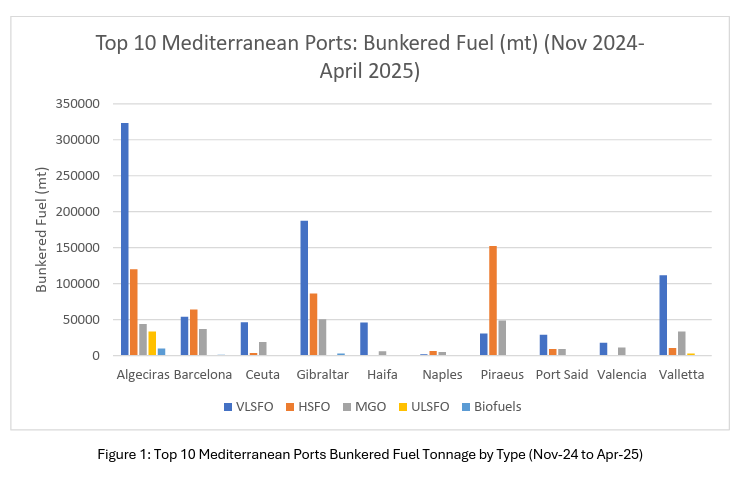
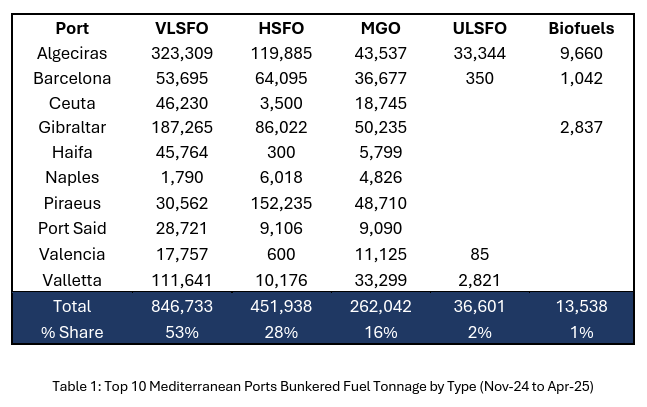
The six months leading up to the implementation of the Mediterranean ECA (1st November to 30th April 2025), VPS tested marine fuels representing 1,610,852mt, bunkered in the Top 10 Mediterranean ports. This consisted of: 53% VLSFO, 28% HSFO, 16% MGO, 2% ULSFO and 1% Biofuels.  

These Top 10 Mediterranean ports during the six months leading up to the ECA coming into force, provided approximately 90% of the total fuel tested by VPS from the whole region. The breakdown by port and fuel type in mt was as follows:  

Over the six month period Pre-ECA, (Nov-24 to Apr-25), 5.5% by volume, of all fuels bunkered across the Top 10 Mediterranean ports, were off-specification. However, by fuel type, over that time period, the following off-specification rates were observed:

VLSFO (6%), HSFO (6%), MGO (3%), ULSFO (2%) and Biofuels (0%).

In terms of the off-specification parameters by fuel type pre-ECA, these were mainly the following:

VLSFO – Viscosity, Cat-fines 
HSFO – Viscosity, Density, Water 
MGO – Flash Point 
ULFSO – Pour Point

Post-Mediterranean ECA
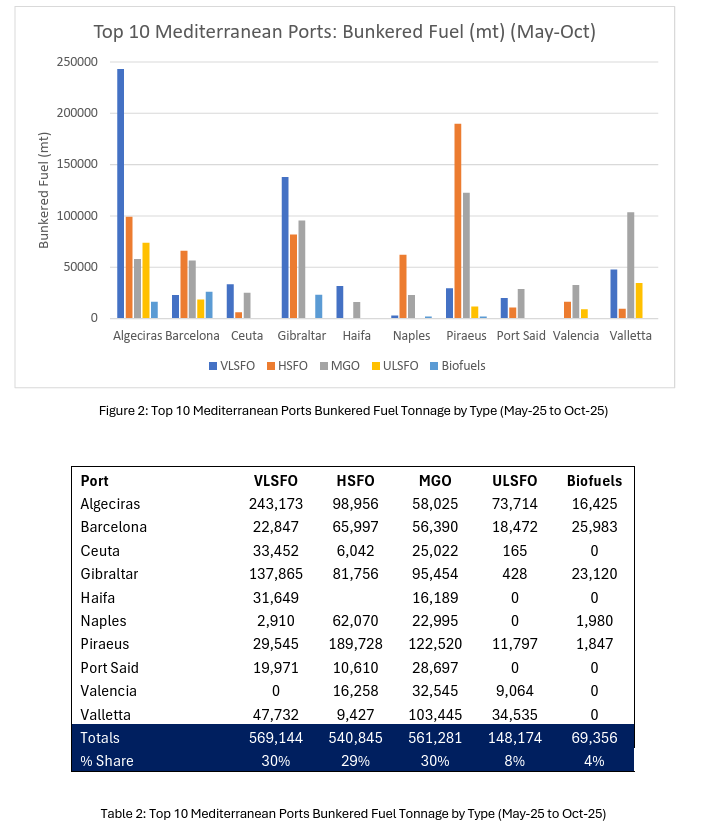
From the implementation of the Mediterranean ECA on 1st May until 31st October 2025, VPS tested marine fuels representing 1,888,799 mt from the Top Ten Mediterranean ports. This consisted of: 30% VLSFO, 29% HSFO, 30% MGO, 8% ULSFO and 4% Biofuels.  

Looking at the Top 10 Mediterranean ports since the start of the ECA and up to 31st October, these ports have supplied approximately 90% of the total fuel tested by VPS, which is a similar percentage to the six month period pre-ECA. 

The breakdown by port and fuel type in mt is as follows: 

Impact of the Mediterranean ECA
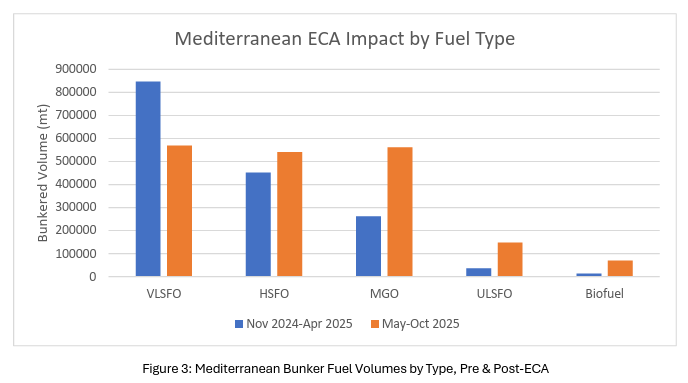
The relative percentage volume of VLSFO bunkered in the ECA has decreased significantly since its implementation, whilst HSFO has increased slightly, with MGO, ULSFO and Biofuel volumes all dramatically increasing in volumes.  

However, looking at the actual volumes Post-ECA versus Pre-ECA, VLSFO has decreased by -278K mt, whilst HSFO (+89K mt), MGO (+300K mt), ULSFO (+112K mt) and Biofuels (+56K mt), have all increased, indicating an increased mix in the use of compliant fuels (<0.1% Sulphur) and scrubber usage across the Mediterranean ECA. 


The combined off-specification rate for the Top 10 Mediterranean Ports, across all fuels since the implementation of the ECA is 5.1%, which is only slightly lower to the pre-ECA offspecification rate of 5.5%. However, by fuel type over that time period, the following offspecification rates were observed:

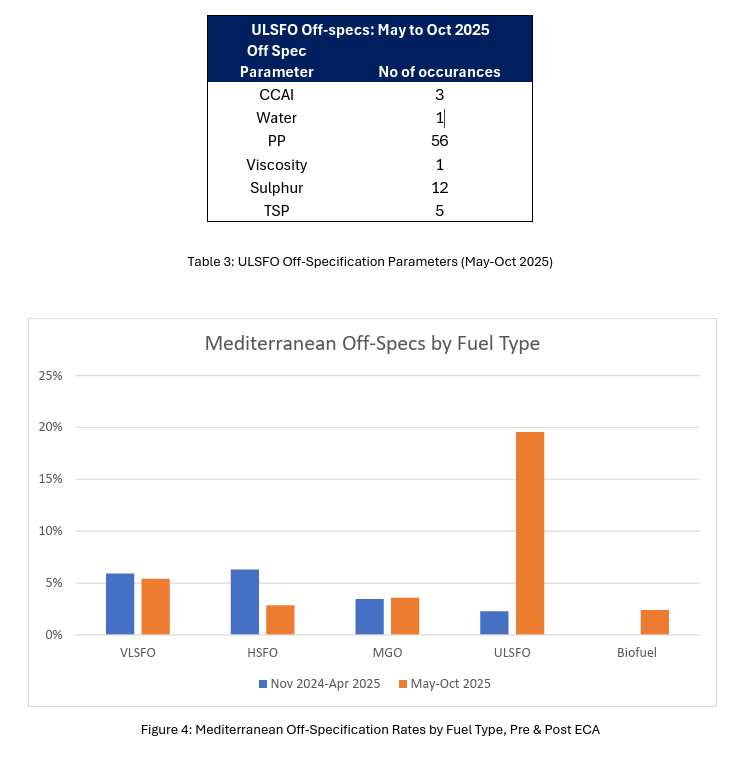
VLSFO 5%, HSFO 3%, MGO 4%, ULSFO 20%, Biofuels 2%

In terms of the off-specification parameters by fuel type post-ECA, these were mainly the following:

VLSFO – Sulphur, Cat-fines 
HSFO – Density 
MGO – Pour Point, FAME 
ULFSO – Pour Point, Sulphur, TSP, CCAI, Water, Viscosity 
Biofuels - FAME 

The high level of ULSFO off-specifications, came from 78 bunker stems (29K mt) out of 341 delivered stems (148K mt): 

Summary 
Biofuel As stated, this article compares bunker volumes and quality, six months Pre-ECA versus the first six months Post-ECA implementation.

Both before and after ECA implementation, the Top 10 Mediterranean Ports provide 90% of all fuel within the region.

From these Top 10 Mediterranean Ports, VPS tested marine fuels representing 1.9million mt from the new ECA region compared with 1.6million mt in the six months leading up to the ECA implementation, showing an almost 20% increase in fuel supply.

Pre-ECA implementation the fuel mix in the Mediterranean was,  53% VLSFO, 28% HSFO, 16% MGO, 2% ULSFO and 1% Biofuels. From the 1st May 2025, the mix changed to, 30% VLSFO, 29% HSFO, 30% MGO, 8% ULSFO and 4% Biofuels.  

So, in terms of actual tonnage, VLSFO decreased by 23%, whilst MGO usage increased by 107%. ULSFO supply increased 4-fold and biofuels increased 5-fold.

Overall Off-specification rates for all fuels before ECA implementation was 5.5% and over the first six month since the start of the ECA, the rate was 5.1%. Since the ECA implementation, offspecification rates for VLSFO and HSFO have reduced to 5% and 3% respectively. However, MGO off-specification rates have increased to 4%. However, the most worrying offspecification rates are for ULSFO which have shown a 10-times increase from 2% to 20% since the start of the ECA, with the main off-specification parameters for ULSFO being pour point, sulphur, TSP, CCAI, water and viscosity.

So in conclusion, as anticipated, the implementation of the Mediterranean ECA on 1st May 2025, has seen a significant change in the Mediterranean fuel mix, with a significant reduction in VLSFO supply and demand, but a major increase in the supply and demand of MGO, ULSFO and Biofuels. A 20% increase in HSFO supply, would indicate an increase in scrubber-fitted vessels and/or existing scrubber-fitted vessels taking more HSFO fuel.  

The wide range of off-specifications across the fuel mix, continues to highlight the need for proactive fuel testing to protect the vessel, their crew and the environment. The ultimate outcome, being a successful reduction in SOx, NOx, PM and GHG emissions across the Mediterranean Sea.

Note, all  data and statistics within this report were generated from the VPS PortStats digital platform.

For further information relating to marine fuel testing or PortStats, please contact: steve.bee@vpsveritas.com


2025 Marine Fuel Review

Steve Bee – VPS Group Marketing & Strategic Projects Director

Introduction
2025 saw another challenging year for global marine fuel quality, as decarbonization legislation took numerous twists and turns, increasing demands upon ship owners and operators across the world. Alongside this, the traditional fossil fuels also raised numerous quality issues.

The IMO delayed the vote on the adoption of the Net Zero Framework (NZF) for one year after strong lobbying against the measures, especially from the USA and Saudi Arabia. This has made the next steps for shipping emissions regulation uncertain with re-negotiation now needed in order to overcome the now apparent entrenched split between countries’ positions.

However, other areas of decarbonization regulation continue to progress, with a review of CII ratings ongoing at the IMO and annual reduction factors to 2030 agreed upon, but still much to be discussed in the upcoming phase 2. The Mediterranean ECA entered into force in May-25, while the Canadian Arctic, Norwegian Sea and NE Atlantic ECAs are approaching. Meanwhile, EU emissions regulation sees the phase-in of the EU ETS continuing, with a further step-up due in Jan-26, while FuelEU Maritime entered into force in Jan-25, with standards scheduled to tighten over the coming years.

The uptake of alternative fuels continued to rise, with alternative fuel capable vessels accounting for over half of orderbook in investment terms. Its estimated by 2030 nearly 20% of the fleet is set to be alternative fuel capable.

VPS tested 1.2million mt of biofuels delivered to ships in 2025, a 50% increase on 2024 levels. Plus methanol testing and ethanol testing demand also increased.

The delay to the IMO NZF vote extends regulatory uncertainty for shipping and could have some bearing on fueling choices in the short-term, with a lack of a clear signal needed to drive more significant investment in ‘green’ technologies.

However, 'green' fleet renewal remains a key factor supporting new-build appetite in some sectors (notably containers) and is expected to remain a general underlying theme, driving investment decisions against the backdrop of an ageing fleet and industry efforts to reduce emissions.

Flexibility and optionality are current key themes, with continuing progress in the uptake of scrubbers (fitted on 30% of fleet GT), ‘Eco’ engines (36%) and Energy Saving Technologies (44%).

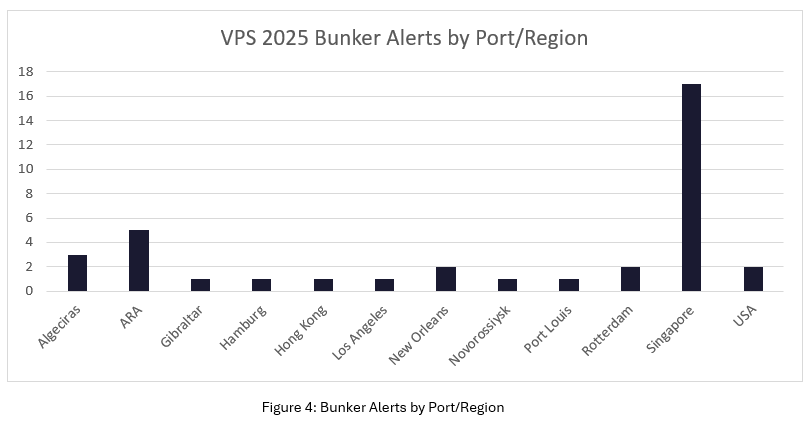
From a fossil fuel perspective, VPS issued 37 bunker alerts over 2025, an increase of 37% over 2024, with VLSFOs being the fuel type requiring the highest number of alerts and Singapore being the most frequent port/region providing potentially problematic fuels. VPS witnessed a pandemic of high cat-fine levels in VLSFOs during August, resulting in seven bunker alerts being released for cat-fine levels ranging from 62ppm-176ppm across East Coast USA, Singapore, Algeciras ARA and Port Louis. This issue highlighted the importance of employing fuel system check services to provide elevated protection and risk mitigation for vessels. In addition VPS witnessed numerous flash point issues, which were in the main related to distillate fuels, but also VLSFOs and HSFOs suffered from this problem.

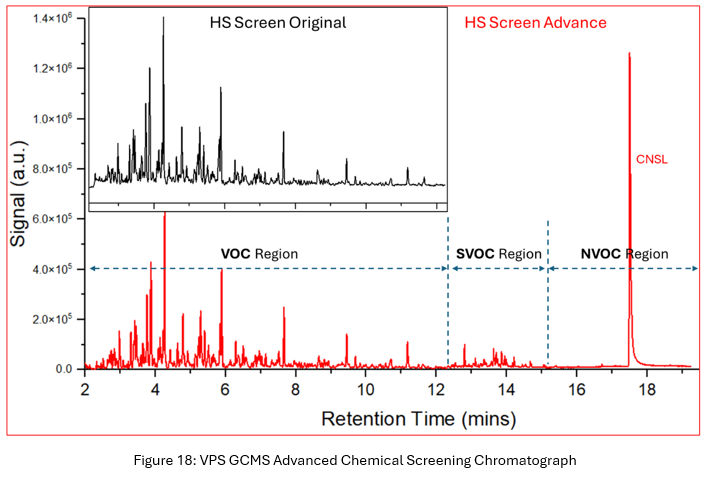
In addition, VPS identified, via our new advanced chemical screening service, the contamination of residual-based fossil fuels, by cashew nut shell liquid (CNSL). This non-volatile organic compound, if undetected pre-burn, can cause issues with fuel pumps and exhaust systems and SCR units.

The 2025 Marine Fuel Mix
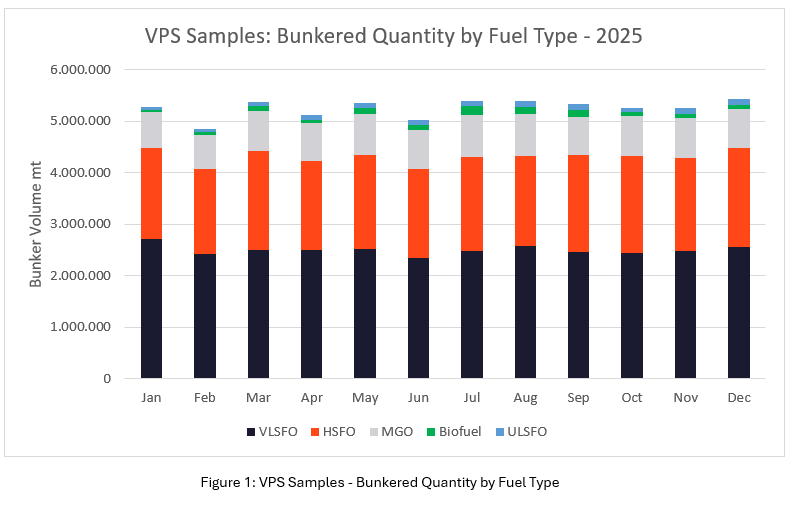
Across 2025, the fuel mix with respect to samples received for testing in VPS laboratories, equated to more than 63 million MT, which averages at 5.25 million MT of marine fuels per month. VLSFO was the most popular marine fuel with 47.6% of the fuels used, followed by 34.4% HSFO, 14.4% MGO, 1.9% Biofuels and 1.8% ULSFO. Regarding biofuels usage, the samples tested by VPS equated to an increase from 805,808 MT in 2024 to 1,203,760MT in 2025 (+50%).
Testing to ISO8217
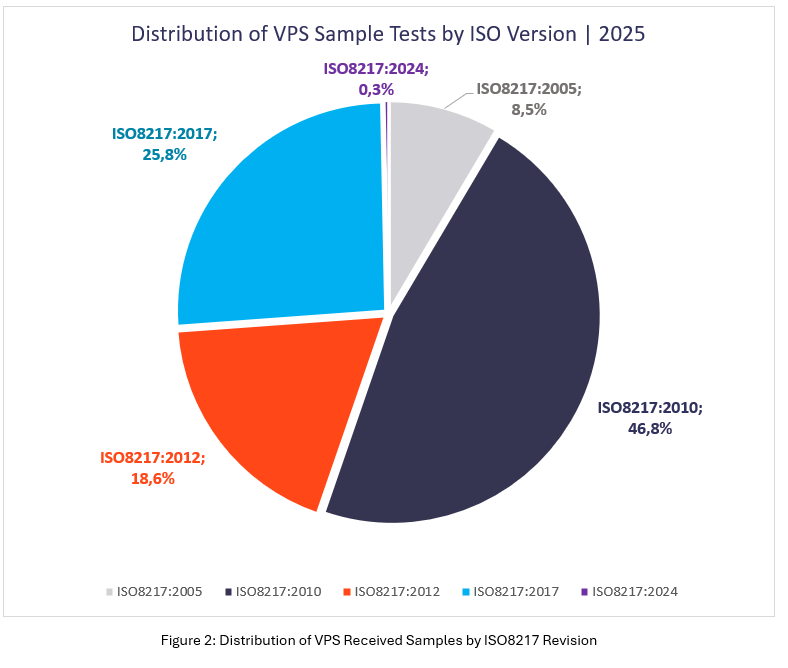
Despite the introduction of the latest and seventh revision of the International Marine Fuel Quality Standard, ISO8217 in May 2024, VPS has seen little take-up of fuel being purchased against this latest revision, at around 0.3% of samples received. In fact, those samples we have received purchased against the latest standard have been for biofuels only.

It is surprising that just over 8% of samples received by VPS for testing in 2025, are still being purchased against ISO8217:2005. This revision is over 20 years old and bears little resemblance to today’s fuel. Therefore, vessels purchasing fuel to this standard are at greater risk of damages and environmental non-compliance.

The majority of marine fuel is still being purchased to ISO8217:2010/12 revisions, (65.4%), which are themselves around 15 years old and offering reduced protection for vessels versus the latest revision. Even the  8 year old 2017 specification, which offers no specification for 0.50%-sulphur fuels, or 0.10%-sulphur fuels, accounts for only 26% of the fuels received for testing.


VPS Bunker Alerts
Bunker Alerts highlight short term quality fuel quality issues identified by VPS, for a specific test parameter of a specific fuel grade/type in a specific port. The service provides valuable information to customers, to assist in avoiding potentially problematic fuel types in a highlighted port or region, to further protect the customer’s asset and crew.

Across 2025, VPS issued 37 bunker alerts, compared to only 27 alerts in 2024, an increase of 37%.

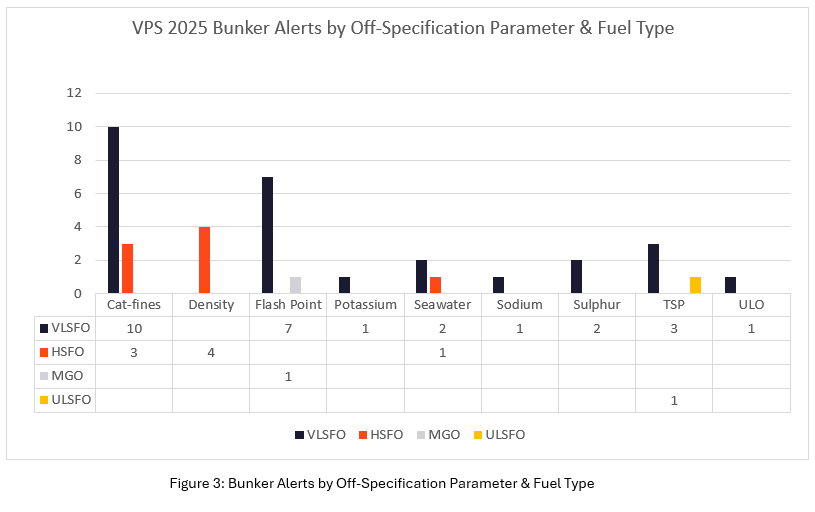
The 2025 Bunker Alerts included all the marine fossil fuel grades of VLSFO (27), being the most problematic fuel, followed by HSFO (8), MGO (1) and ULSFO (1).
The Bunker Alerts  covered 9 different test parameters, Cat-fines (13), Flash Point (8), TSP (4), Density (4), Seawater (3), Sulphur (2), Sodium, Potassium, ULO.


Singapore accounted for 46% of the Bunker Alerts issued in 2025, which is an unusually high level. Whilst China did not require any Bunker Alerts during the course of the year.


2025 Marine Fuel Off-Specifications
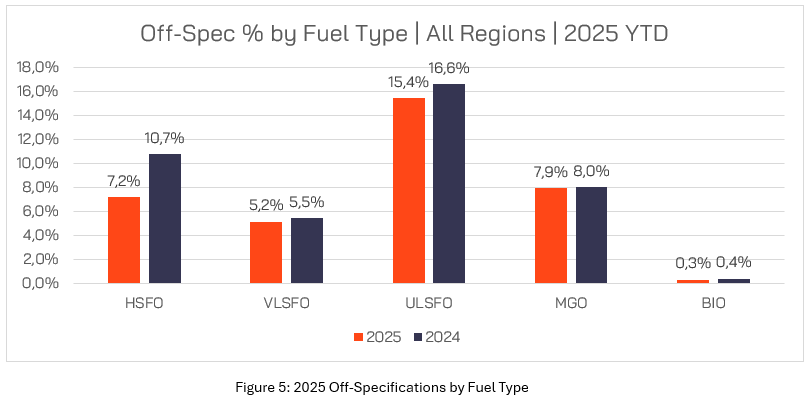
Whilst VPS issued 37% more Bunker Alerts in 2025 versus 2024, the overall off-specifications by fuel grade actually improved against 2024 levels for HSFOs, VLSFOs, ULSFOs, MGO and Biofuels. The greatest improvement was shown by HSFOs going from 10.7% in 2024 to 7.2% in 2025. 
 

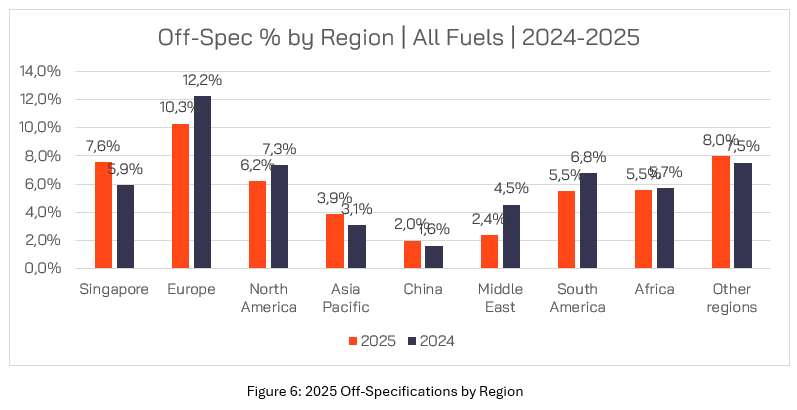
In terms of region, Europe continues to be the area providing the highest level of off-specification fuel, even though the level of off-specs improved in 2025 versus 2024, going from 12.2% to 10.3%. However, Singapore’s off-specification rate increased from 5.9% in 2024 to 7.6% in 2025.
 

VLSFO Fuel Quality
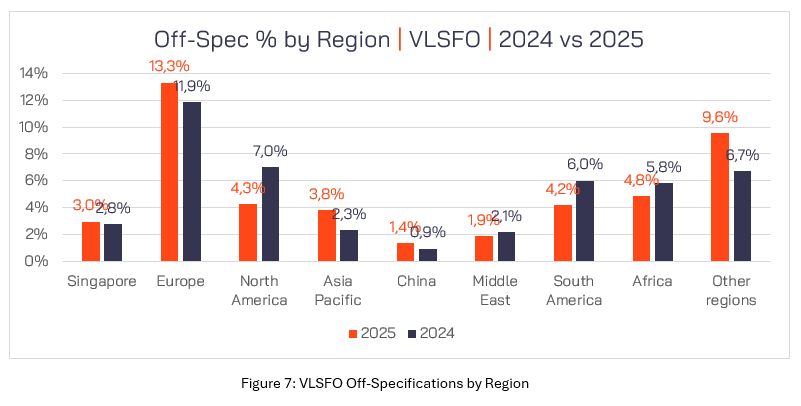
As the most used marine fuel type, VLSFO accounts for almost half of the fuels tested by VPS. In terms of quality, VLSFO had an off-specification rate of 5.2% in 2025. Of the 5.2% VLSFO off-specifications, Europe provided the highest level of off-specification VLSFOs in both 2025 (13.3%) and 2024 (11.9%). Africa, as a specific region, provided the next highest level of off-specification VLSFO with 4.8% of fuels tested exhibiting at least one off-specification parameter in 2025 compared to 5.8% in 2024. North America had the third highest VLSFO off-specification rate with 4.3% off-specs versus 7% in 2024.


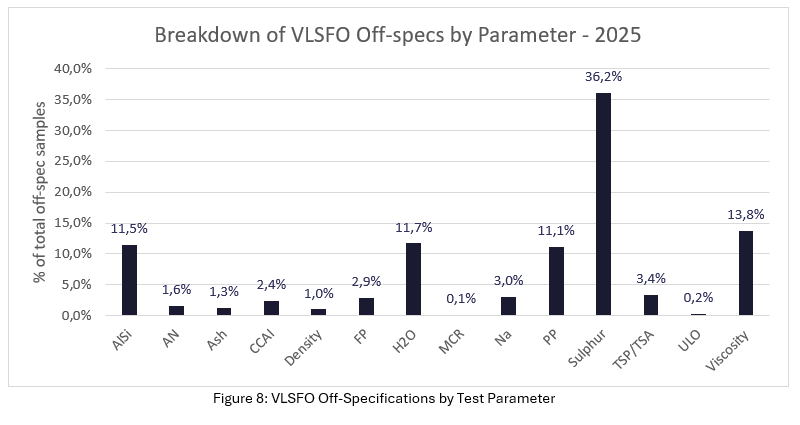
Sulphur is the most common off-specification parameter of VLSFOs, accounting for 36.2% of VLSFO off-specs in 2025. When it comes to looking at all VLSFOs tested, 0.5% had a sulphur content >0.53%, whilst 1.4% of samples tested were between 0.50%-0.53% sulphur and the remaining 98.1% had a sulphur content of <0.50%. 11.5% of VLSFOs had off-specification cat-fines. During August 2025, VPS witnessed a pandemic of high cat-fines in VLSFOs, warranting seven bunker alerts to issued in a single month, a scenario never witnessed before.

There was no link between these fuels which were supplied across East Coast USA, ARA, Algeciras, Port Louis and Singapore, by different suppliers. Such an event highlights the importance of the need to carryout regular quarterly Fuel System Checks (FSCs) in order to monitor the efficiency of the vessel’s purifiers. Using this service helps verify purifier efficiency, which typically achieves 60–80% removal of cat-fines when operated correctly; however, given that many OEMs recommend cat-fine levels below 15 ppm, elevated delivery levels (with 21.5% of VLSFOs exceeding 40 ppm, despite remaining within the ISO 8217 limit of 60 ppm) can still pose a significant wear risk if purification performance is not optimal.
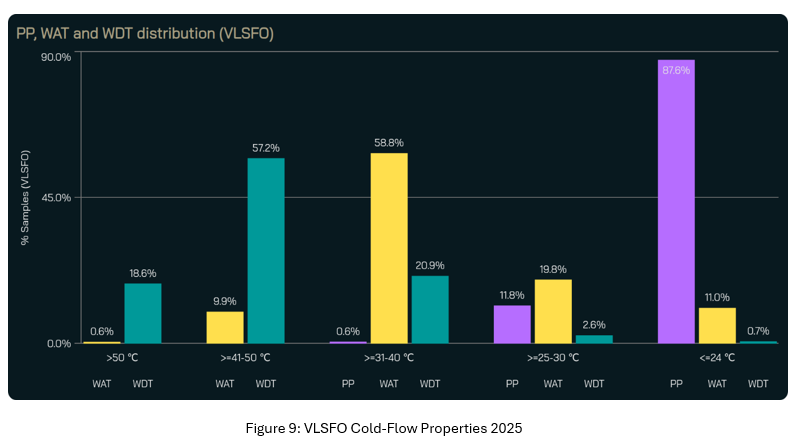
The importance of the additional cold-flow test of Wax Appearance Temperature (WAT) and Wax Disappearance Temperature (WDT), was further highlighted in 2025 with 59% of VLSFOs exhibiting WAT of 31-40ºC and 10% having WAT between 41-50ºC. 57% of VLSFO samples had a WDT of 41-50ºC, with 19% having a WDT of >50ºC. VLSFOs cold-flow properties are a definite concern with wax precipitating from the fuel at temperatures way in excess of 10ºC above the pour point, potentially causing numerous operational problems such as filter and pipework blockages.
 

HSFO Fuel Quality
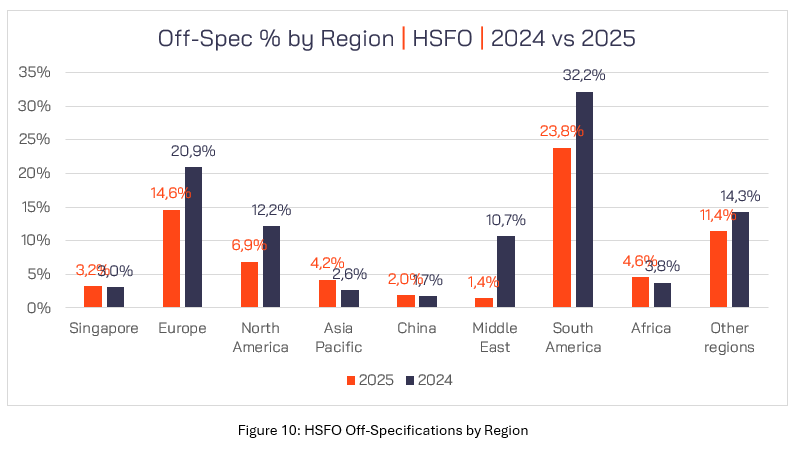
HSFO represents almost 34.4% of all bunker samples received by VPS for testing, indicating a relatively high level of scrubber usage onboard vessels today. 7.2% of HSFOs tested in 2025 were off-specification for at least one test parameter. In terms of regional HSFO off-specifications, South America accounted for 24% of off-specs, compared to 32% in 2024. Second highest off-spec region was Europe, with 14% in 2025 compared to 21% in 2024 and North America was third with 7% of HSFO off-specs in 2025, compared to 12% in 2024.
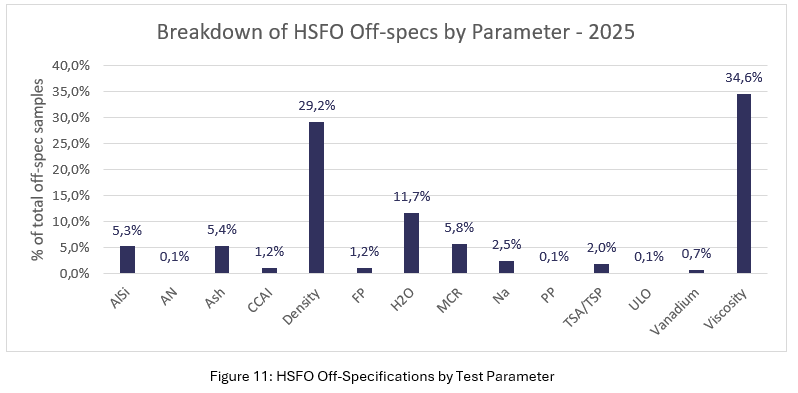
As usual, viscosity and density were the two most common HSFO off-spec parameters in 2025, with 35% of the off-spec attributed to viscosity and 29% to density, compared to 54% and 21% respectively in 2024. Water was the third most frequent HSFO off-specification parameter in 2025, with 12% off-spec level compared to 13% in 2024.

Whilst cat-fines accounted for 5.3% of HSFO off-specs in 2025, this was higher than the 2024 level of 3%. Again, like VLSFOs it highlights the importance of Fuel System Checks (FSC) to protect the engine from potential damage from this abrasive contaminant, by improving purifier efficiency. 14.5% of HSFOs had a cat-fine level of >40ppm in 2025.
MGO Fuel Quality
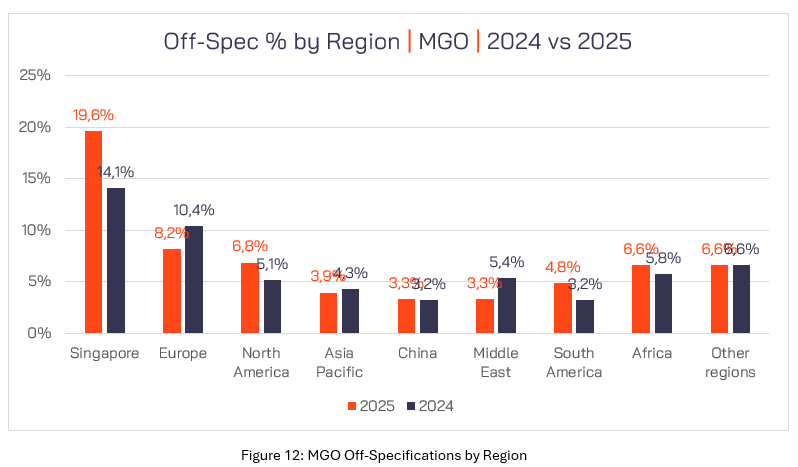
MGO accounts for 14% of all samples received by VPS for testing. Many ship owners and operators choose not to test MGO, believing this fuel type is problem-free. However, this could not be further from the truth. In 2025, 7.9% of all MGO samples tested were off-specification for at least one test parameter. Singapore accounted for 19.6% of all MGO off-specifications, which was an increase on the 14.1% Singapore experienced in 2024. Europe was the next highest region in terms of MGO off-specs with 8.2%, followed by North America showing 6.8% of all MGO off-specifications.
 

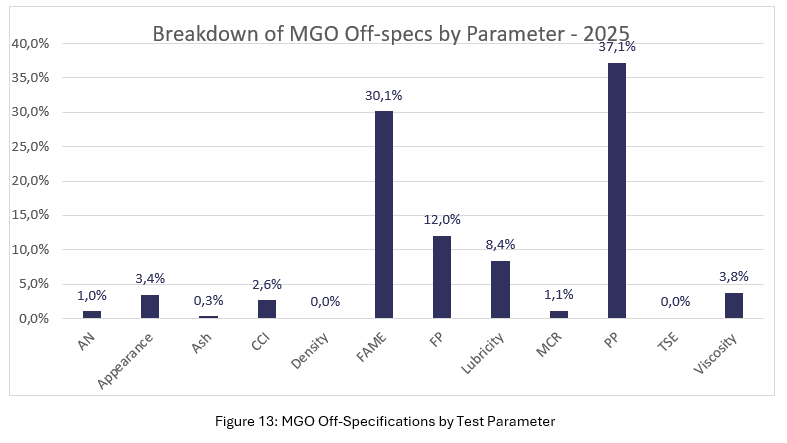
Pour Point was the most common MGO off-specification parameter in 2025, with 37% of MGO off-specs attributed to Pour Point compared to 47% in 2024. FAME contamination was the second most common MGO off-specification parameter accounting for 30.1% of all MGO off-specs. As FAME is a common component within automotive, aviation fuels and now marine biofuels, it is not surprising we are seeing such levels of off-specification.

Flash Point was the third most common MGO off-specification parameter, with 12% of MGO off-specs attributed to Flash Point. 
Mediterranean ECA
The Mediterranean ECA came into force on 1st May 2025. For the six months leading up to the implementation of the Mediterranean ECA and the six months after, the following ports provided 90% of all fuel within the region (fuel volumes in mt):
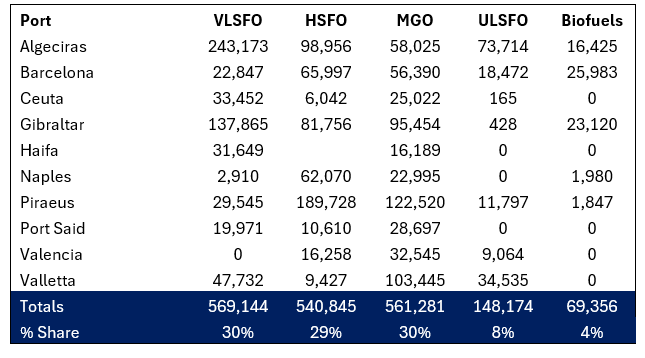

From these Top 10 Mediterranean Ports, VPS tested marine fuels representing 1.9million mt from the new ECA region compared with 1.6million mt in the six months leading up to the ECA implementation, showing an almost 20% increase in fuel supply.

Pre-ECA implementation the fuel mix in the Mediterranean was,  53% VLSFO, 28% HSFO, 16% MGO, 2% ULSFO and 1% Biofuels. From the 1st May 2025, the mix changed to, 30% VLSFO, 29% HSFO, 30% MGO, 8% ULSFO and 4% Biofuels.

So, in terms of actual tonnage, following the implementation of the ECA, VLSFO decreased by 23%, whilst MGO usage increased by 107%. ULSFO supply increased 4-fold and biofuels increased 5-fold.

Overall Off-specification rates for all fuels before ECA implementation was 5.5% and over the first six month from the start of the ECA, the rate was 5.1%. Since the ECA implementation, off-specification rates for VLSFO and HSFO have reduced to 5% and 3% respectively. However, MGO off-specification rates have increased to 4%. However, the most worrying off-specification rates are for ULSFO which showed a 10-times increase from 2% to 20% since the start of the ECA, with the main off-specification parameters for ULSFO being pour point, sulphur, TSP, CCAI, water and viscosity.
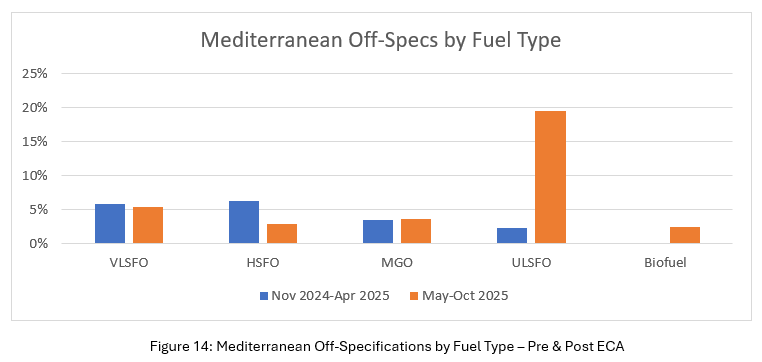
So, as anticipated, the implementation of the Mediterranean ECA on 1st May 2025, saw a significant change in the Mediterranean fuel mix, with a significant reduction in VLSFO supply and demand, but a major increase in the supply and demand of MGO, ULSFO and Biofuels. A 20% increase in HSFO supply, would indicate an increase in scrubber-fitted vessels and/or existing scrubber-fitted vessels taking more HSFO fuel.

The wide range of off-specifications across the fuel mix, continues to highlight the need for proactive fuel testing to protect the vessel, their crew and the environment. The ultimate outcome, being a successful reduction in SOx, NOx, PM and GHG emissions across the Mediterranean Sea.


Biofuels
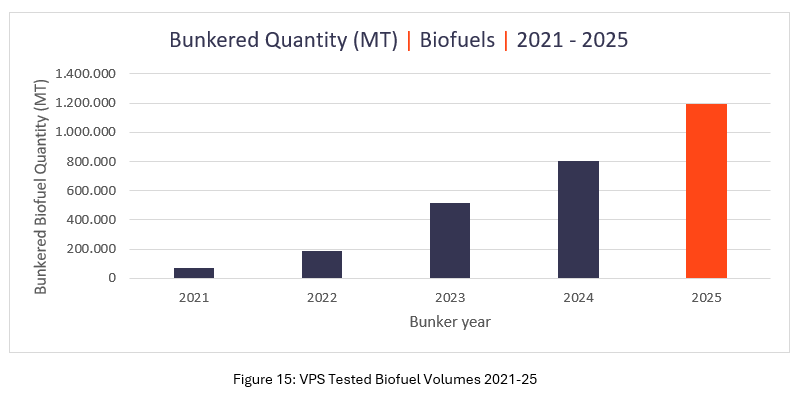
As global shipping looks towards low-to-zero carbon fuels to answer many emissions reduction challenges, biofuels offer an immediate “drop-in” solution. As such VPS tested the equivalent of approximately 1.2 million mt of biofuels in 2025 compared to 800,000 mt in 2024.
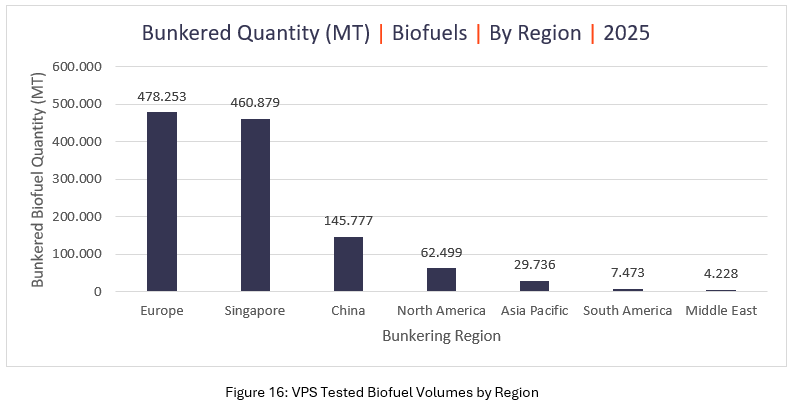
Europe, (mainly ARA-region) continued to provide the highest volume of biofuels  at 478K mt (ca. 40%), but Singapore is pushing hard for the leading biofuel supply port (ca. 39%), providing 461K mt. China is significantly increasing its biofuel supplies, now accounting for 12% of biofuel supply in 2025.
The most common biofuel blend was B30 (11-30% bio), which accounted for 38% of biofuel samples tested by VPS a decrease from 51% in 2023. Yet, there was minimal change regarding B100 demand which remained at 8%. However, the significant change was seen at the B10 blends which increased from 16% in 2024 to nearly 28% in 2025.
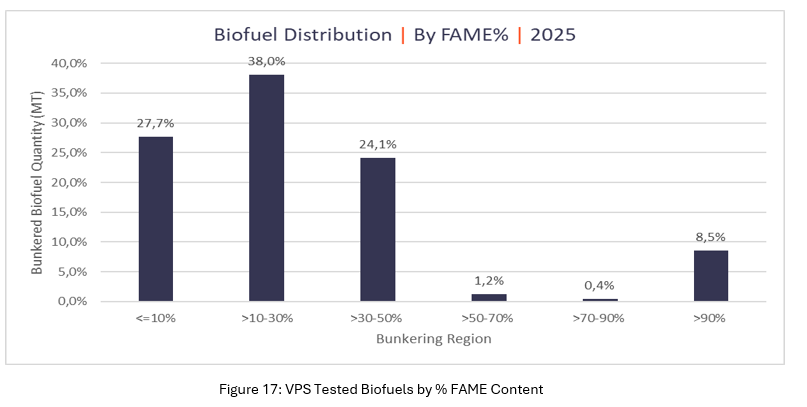
The majority of biofuels continue to contain mainly Fatty Acid Methyl Esters (FAME) as the bio-component, although VPS continue to receive samples containing HVO, HEFA, Cashew Nut Shell Liquid (CNSL) and Tyre Pyrolysis Oil (TPO).
Where FAME is the bio-component within marine biofuels, the key fuel management considerations are:

  • Energy Content, 
  • Renewable Content,
  • Fuel Stability, 
  • Cold-Flow Properties,
  • Corrosivity, 
  • Microbial Growth

The market will continue to increase the volumes and availability of biofuels over the coming years. Whilst ISO8217:2024 now contains two test specification tables for bio-distillates and bio-residual fuels through Table 1 and Table 3, these tables do not provide full protection or detailed information regarding biofuels. Therefore, the VPS Additional Protection Service (APS-Bio) for vessels using biofuels, will continue to offer a more comprehensive test slate to VPS customers.


One point to note in relation to CNSL, is that over the past year, a number of CNSL producers, have been improving their manufacturing processes, utilising additional distillation. This converts more of the anacardic acid and cardol to cardanol, resulting in a far less acidic and reactive product, more suited to marine fuel blending.


Fuel Contamination Issues
Each year, VPS identifies a number of cases of chemical contamination of marine fuel. The majority are related to volatile organic compounds, where the most common are styrene, dicyclopentadiene and chlorinated hydrocarbons. On an individual vessel basis, such contamination can be a significant operational concern, with potentially expensive damages. On occasion, eg Houston (2018) and Singapore (2022), a more widespread contamination case is seen, which affects numerous vessels over a short-time period.

From the final quarter of 2024 and throughout 2025, VPS identified contamination of residual-based, fossil fuels with the non-volatile organic bio-component, Cashew Nut Shell Liquid (CNSL). CNSL, comprises of Anacardic Acid, Cardol and Cardanol in varying concentrations, depending upon the treatment and refining processes of the CNSL. Such contamination incidences, if not detected pre-burn, can cause numerous potential problems onboard, such as, fuel pump issues, exhaust system problems and even SCR unit failures.

To counter this, VPS developed a new, unique, pre-burn chemical screening method, which allows the detection of volatile, semi-volatile and non-volatile organic compounds in one single 20-minute analysis time. This new screening method can be used in place of the original VPS screening method, which detected only volatile organic compounds.
 

Methanol & Ethanol
Methanol and now ethanol are being seriously considered as low-carbon marine fuels. At the end of 2024, a new standard was introduced, ISO6583:2024 as the first international quality standard for methanol use as a marine fuel. It is very important to note, that to achieve near-zero well-to-wake emissions, the methanol used must be “green” methanol.

During the latter half of 2025, VPS became involved in numerous projects in relation to ethanol use as a marine fuel. In September 2025, the Global Ethanol Association (GEA) was launched to build demand for ethanol in shipping.

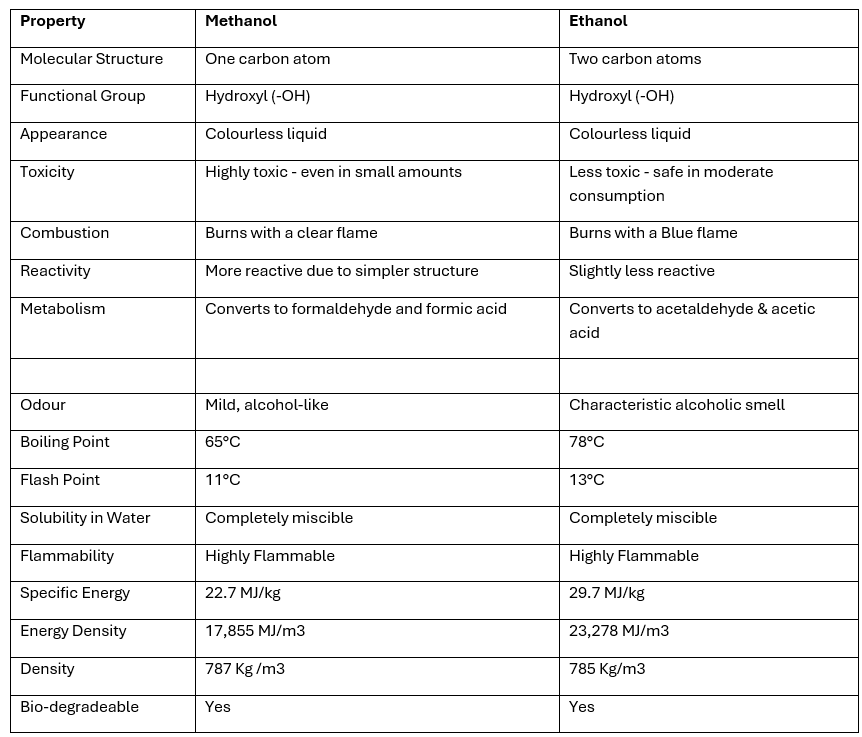
Methanol and Ethanol exhibit very similar chemical and physical characteristics and both have numerous fuel management pro’s and con’s when being considered as a marine fuel. The properties of both methanol ad ethanol are listed below for comparison:
 

Looking at information from the DNV AFI database and Clarksons, DNV state there are currently 450+ methanol-capable vessels in operation or on order. This includes:
•     Ships already operating on methanol
•     Ships capable of methanol dual‑fuel operation
•     Ships under construction with methanol capability
Clarksons state methanol-capable vessels account for 14% of the alternative-fuel tonnage ordered, with methanol being the second most popular alternative fuel after LNG.

Summary
2025 once again highlighted the importance of bunker fuel quality testing, as a proactive means to protect vessels, their crew and the environment. With additional tests and services, such as Chemical Screening, Wax Appearance Temperature testing and fuel system checks (FSCs), currently not included within ISO8217, providing further vital information in achieving heightened levels of protection.

Biofuels usage, via  varying blends of FAME, HVO, CNSL, etc, continue to increase in demand and importance, as ship owners and operators look to achieve improvements through CII, EEXI, as well as looking to counter the financial impact of the EU ETS scheme.

The revision of ISO8217 released on 30th May 2024, was a welcomed improvement on previous revisions, but still not a fully comprehensive solution in vessel, crew and environmental protection. Therefore, additional tests continue to hold an important role in fuel management.

Methanol and now ethanol, demand and usage will also grow, with a rapidly growing order book for dual-fuel-powered vessels. Yet, methanol and ethanol also come with a host of fuel management challenges, with testing playing a major role in ensuring quality and fit-for-purpose considerations over the coming years.

So, 2026, suggests another year of widening marine fuel types and grades coming to market, coupled with their growing fuel management considerations.

For further support to your fuel management issues, please contact steve.bee@vpsveritas.com


New Managing Director for the Americas

World Leading Maritime Services Company VPS, is pleased to announce the appointment of Neil Chapman as the company’s Managing Director of the Americas.

Neil will play an integral role in improving the operational efficiency and profitability of our shipping customers, through the delivery of VPS services in this, our very important, Americas region. He has a wealth of experience in Testing and Inspection, having worked for most of the major TIC companies during his 40 year career. More recently Neil has held senior commercial leadership roles and he has developed a deep understanding of how to deliver tangible value to clients and operating as a true partner, to tackle the everchanging demands of the marine industry.

In this role, Neil will lead the Americas region with a particular focus on working closely with our customers across the marine and energy supply chain. He will drive local initiatives aimed at strengthening VPS's partnerships with new and existing strategic clients. In addition, Neil will be part of the wider VPS Group Leadership Team, acting as a focal point for clients across the entire Americas.

Dr. Malcolm Cooper, VPS CEO, stated: “We are very pleased to have Neil on board, as his deep sector knowledge will help our customers to improve their operational efficiency and drive up profitability. This is particularly important as we help our customers navigate an increasingly complex marine fuels mix and rapidly changing global Carbon taxation landscape”.

Neil Chapman stated:  “I’m delighted to join VPS at such an exciting time for the maritime industry. With the ongoing evolution of fuel quality, emissions regulations, and carbon accountability, VPS is uniquely positioned to help our customers make smarter, more sustainable operational decisions. I look forward to working closely with our regional teams and customers across the Americas to strengthen our partnerships and deliver measurable value as we navigate this dynamic market together.”


Maress 2.0: Data-driven Decarbonization Steering Towards New Performance Heights

By Steve Bee – VPS Group Marketing & Strategic Projects Director.

Maritime decarbonization legislation and directives continue to increase and diversify. This places elevated demands upon shipowners and operators to provide meaningful, transparent and traceable data to legislative bodies, in order to substantiate their hopefully decreasing carbon-footprint and increasing compliance performance.

Since its launch in 2016, the VPS Maress software application has led the drive to assist in the decarbonization of the offshore shipping market. This cloud-based system, where no hardware installation is required, seamlessly connects with leading providers of data collection and ship-to-shore technologies. The aim is to significantly reduce fuel and energy consumption, offering environmental, financial, and strategic benefits to its users, delivering tangible business value through its functionality and insights.

With more than 700 offshore vessels currently utilizing Maress to reduce their fuel consumption, emissions and costs, via the proven energy efficiency solutions Maress provides, has seen this software application go from strength to strength.

The proof of the impact Maress can provide, has been seen through three successive Annual Summer Campaigns 2023-25, where VPS invited numerous offshore shipping companies and their vessels to participate in a three-month programme (June-August), each year. With each vessel using Maress, the campaign is a competition to see how much carbon dioxide emissions could be reduced per vessel and as a collective fleet, utilizing the tools Maress provides.

The results have been very impressive:
2025 - 300+ vessels from 12 leading shipping companies saved approximately 12,000mt of carbon dioxide emissions.  On average the participating vessels improved their efficiency by more than 10%. That kind of progress doesn't happen by chance - it is the result of practice, dedication and crews continuously refining how they operate. Post-campaign, VPS highlighted the vessel, Volantis, a CSV operated by Havila Subsea & Renewables, and its dedicated crew. Throughout the campaign Volantis spent ~75 % of her days in DP or Transit, modes that account for >85 % of total fuel use. Yet the crew still delivered significant savings through relentless, real time optimization. The Master of the Volantis stated,  “We’re always chasing the next increment. There’s a continuous dialogue between bridge, engine room, charterer and shore management on how to do better. During transits we agree an economical speed window with the client, then run only the engines and thrusters we need - each kept in its sweet spot load range.”

2024 – 303 vessels from 12 leading shipping companies saved over 7,000 mt of carbon dioxide emissions. Back in 2024,  REM HSEQ Manager Iliyan Aleksandrov commented: "REM has committed to optimising the energy consumption of our operations and being an active player in the ongoing transition to a more sustainable maritime industry. We achieved our ISO 50001 certification this year, and amongst other initiatives, we were excited to extend our working relationship with VPS Decarbonisation on this campaign. Crew dedication, strong focus on energy efficiency and consumption optimization, combined with VPS´ decarb advisory service and Maress software were the key factors in achieving the amazing results”.

2023 – 133 vessels from 8 leading shipping companies saved 10,000mt of carbon dioxide emissions. Back in 2023, Solstad Offshore’s Chief Sustainability Officer, Tor Inge Dale concluded: "We strive to stay in the forefront of the industry's change towards more sustainable operations, and we firmly believe in collaboration in combination with powerful digital tools such as Maress to facilitate just the kind of benchmarking to make this happen. We´ll be ready for the next campaign, and hopefully with friendly competition against even more vessels and companies wanting to be part of the change".

Maress has and continues to evolve, to lessen the workload on ship operators, when it comes to monitoring, verifying and reporting, vessel performance and efficiency, plus providing actionable insights at every level, from fleet-wide trends to the performance of individual vessel operations.

And now, the evolution continues through the recently launched Maress 2.0. This enhanced and advanced version, allows users to instantly compare vessels, or track a single vessel’s progress over time, helping to identify opportunities for efficiency and cost savings. Integrated data validation and smart notifications support in ensuring the vessel data remains trustworthy, so operators and their crew can respond to issues before they impact operations or compliance.

Existing users of Maress will have peace-of-mind as they see that the new Maress works seamlessly alongside their existing version, allowing the continuation of all previous functionalities. All the key features from legacy Maress have been transferred and enhanced within the new Maress 2.0 platform, with the addition of new key features.

Key Highlights of Maress 2.0:

  • Improved analytics and reporting with great flexibility on time periods
  • Weather information per day in-map provides more insights
  • Understand the effect of your initiatives by baseline comparison year on year
  • Support for alternative fuels such as Biofuels
  • Useful voyage replay with weather, activities and efficiency meters
  • Enhance your data quality with the new Data QA and Validation module
  • Optimize your energy utilization with advanced Energy Analytics
  • Future-proof technology and adaptive user interface

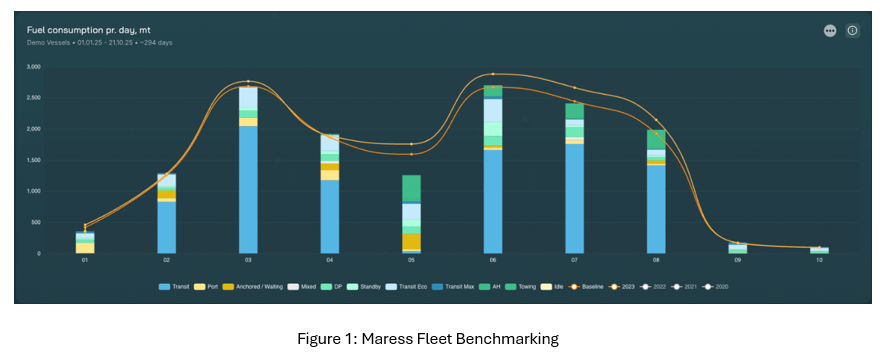
In terms of benchmarking a fleet’s performance against historical baselines or any custom data range, Maress Fleet alows comparison of any period in order to identify trends and measure the impact of operational changes.


Users can visualize, time spent vs fuel spent, to understand where their fleet operates most efficiently and where optimization opportunities exist.

The software now includes a new “Add to Export” button available on every front-end component. With this feature, users can easily select any data view—such as tables, metrics, and charts—and include them in a customized export. Once components are added, the PDF Exporter provides a live preview where users can drag and drop to rearrange the order, remove items, and organize the layout exactly how they want.

This gives users full control over what gets exported and how it appears in the final PDF report, making it easier to create polished, presentation-ready documents in just a few clicks.

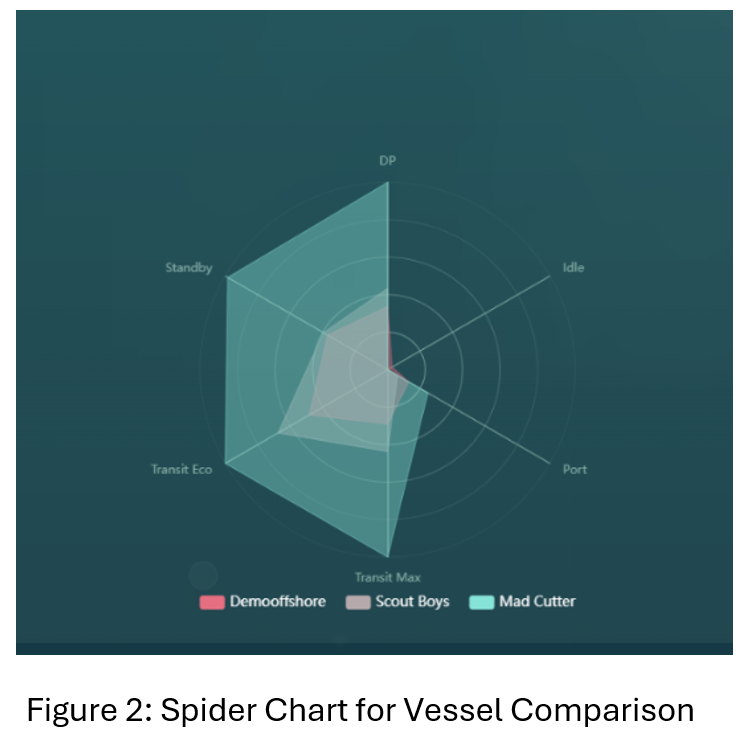
Maress 2.0 now has a powerful comparison tool, Maress Vessel Compare, that analyzes more than 10 key performance KPIs across offshore vessels—making it easier than ever to see which vessel performs best. Multiple vessels can be compared side by side at the same time, giving a clear and fair overview.

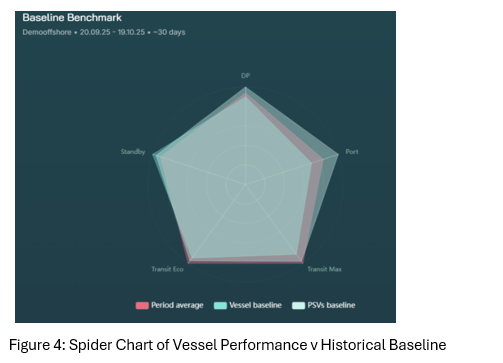
The vessel comparison also includes a spider chart overlay, which visually compares performance across all vessels at a glance.

This allows users to easily measure how vessels perform against each other—either across their historical performance or within specific projects.

It’s especially useful for analyzing sister vessels, helping to quickly spot strengths, weaknesses, and operational differences.                       


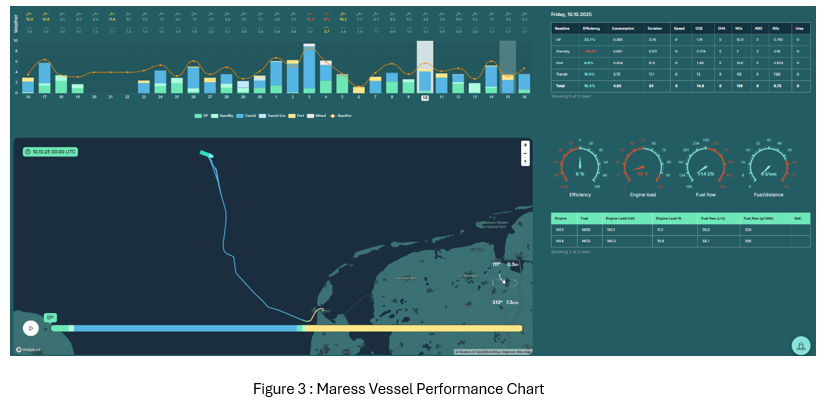
Via Maress Vessel, the software now allows greater insights into the performance of single vessels, where its possible to playback all activities and investigate performance down to individual reported event level. For example, did a vessel overconsume on a specific day? Check the weather symbol for a possible explanation and deeper operational context.

Users can now easily identify when, where, and why poor fuel performance occurs—at any point in time.
 

Spider charts compare a vessel’s current performance against its own historical baseline as well as the average of similar vessel types, giving clear context on where the vessel is excelling or needs improvement.
 

The new Maress 2.0 now offers a data quality and validation module. This not only alerts to potential data issues, but also explains what’s wrong, so users can take quick and informed action. This can be continuously used either onboard or ashore to secure the data quality. Personalized notifications empower the crew to address issues proactively; reducing the risk of compliance breaches and ensuring company KPIs and regulatory reports (DCS/MRV) are reliable.

Trustworthy insights start with trustworthy data.
 

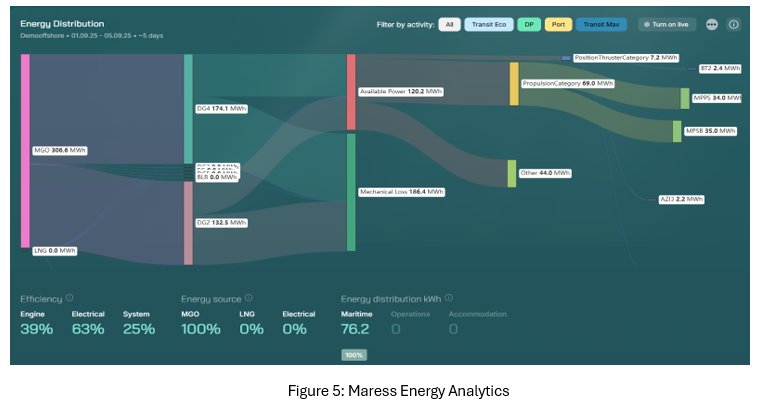
Maress 2.0 offers an add-on-module, Maress Energy Analytics which includes an Energy Flow Diagram which gives a clear, visual overview of how fuel energy is used across the vessel. Instead of just seeing fuel consumption numbers, its now possible to see where the energy is transmitted and how efficiently it is converted into usable power.

Why this matters:

✅ Identify inefficiencies in the energy chain
 ✅ Understand exactly how fuel is being used on board
 ✅ Optimize operations such as generator setup and reduce unnecessary consumption
 ✅ Make data-driven decisions to improve performance and cost savings

This feature turns complex data into actionable insight, helping to spot energy losses, improve efficiency, and ultimately lower operational costs.


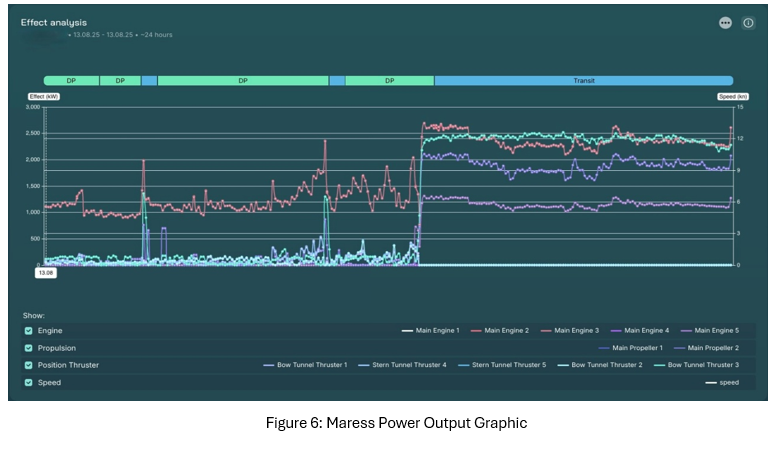
The new Power Output Graph provides a complete, real-time view of how vessel’s engines, propulsion, and thrusters perform in relation to its speed and operational mode. With this interactive visualization, one can see exactly how power is generated and consumed across different systems, helping to understand performance patterns, spot inefficiencies, and make informed operational decisions.

Why this matters:

✅ Monitor how efficiently power is converted into vessel movement

✅ Identify energy-intensive operations and optimize accordingly

✅ Compare modes (DP, Transit, Standby, etc.) to improve efficiency and planning

✅ Customize your view to focus on the data that matters most

Designed to connect the offshore ecosystem, Maress 2.0 now gives owners, managers, operators and charterers, clear visibility from fleet trends to thruster level detail, providing actionable insights that improve, efficiency, compliance and cost savings.

Maress 2.0 is already receiving very positive feedback:

“The new Maress 2.0 by VPS Decarbonisation has been really impressive so far. The user interface with more liquid design is working very well, and the added functionality on exporting specific graphs to pdf are more than welcome. The Analytics-module enables us to dig more into the high-resolution data and to provide detailed knowledge on the operation and setup of vessels in different modes. We are also using the MRV-module for the 2025 EU MRV-reporting, and the Cargo & Bunker input function are working very well for the users onboard the vessels.

With the new NOx-module also integrated in Maress, we see a more professional and complete one-stop-shop for integrated fuel monitoring and reporting.

The support from the VPS Decarbonisation-team has been excellent all along during the upgrade, providing assistance and guidance on the new features.”

Jon August Houge, Sustainability Director, Sea1 Offshore


To request a demonstration of Maress 2.0, or any further queries please contact Rolf G.S. Buøen at: decarbonisation@vpsveritas.com


Maximising Lubricant Value

By Joe Star – VPS Strategic Account Manager.

Lubrication onboard
With thousands of litres of highly refined, and specifically formulated hydrocarbons flowing around a vessel at any one time, lubricating oils are the lifeblood of maritime operations, supporting a wide variety of applications.

Reducing friction, avoiding metal to metal contact, providing cooling and keeping components free of deposits and contamination, lubricating oils  are required to perform a wide range of duties. To ensure that this is the case, all approved lubricants are rigorously tested and must pass performance thresholds outlined by the Original Equipment Manufacturer’s (OEM’s), culminating in viscosity, Base Number and other parameters that must be achieved by the “fresh” product prior to use.

As the lubricating oils circulate throughout the systems and engines onboard, these values can and will change, based upon the harsh temperature changes, mechanical wear and external contamination through the environment, or other fluids, entering the system. The typical oil analysis testing regimes per equipment are setup to monitor and steward this amongst equipment classes, with samples routinely taken on a quarterly, six-monthly or annual basis depending upon the demands of the equipment and stress the application places on the lubricant.

As engines and equipment continue to push for greater efficiency, ensuring the lubricant can keep up with these demands, maintaining expected drain or refill intervals is critical to operating a vessel efficiently. This places a greater importance on purification and filtration systems onboard.

The following whitepaper shares insights from VPS’ extensive database of lubricant oil results, providing actionable best practices to extract maximum value and longevity from circulating systems, monetising the purifier systems onboard.

Maximising lubricant value and lifespan
When reviewing overall vessel or fleet-wide performance across used oil analysis results, the key focus should be on understanding and identifying any repeat offenders which are present. This highlights examples where the root cause is not rectified and ongoing lubricant refreshment will only temporarily bring parameters back into compliance, which will then be quickly challenged operationally.

Assessing circulating systems, such as four-stroke engines, or circulating system oil within two-stroke slow-speed engines, operators should look to optimise the majority of any caution or alert results which are failures relating to Viscosity or Base Number. 

This will highlight when the lifespan of the lubricant has been maximised based upon key base oil and additive properties within the lubricant.

Viscosity (mm²/s), is largely derived from the base oil within the lubricating oil and can be influenced by additive packages.

Operationally, Viscosity is one of the first parameters that provides an indication there are issues with lubrication within the system. These are either through increases due to oxidation, combustion and soot formation; or decreases via distillate fuel dilution or water ingress. Both detrimentally impact the lifespan of the lubricant and potential reliability of the asset, with longer term water ingress accelerating additive depletion. This can lead to the formation of emulsion within the lubricant, counter-intuitively increasing the viscosity over time.

As the lubricant is in use, its viscosity value will change over time and the property of the base oil within the lubricant remains; unless severe oxidation is identified. Lubricant viscosity and performance can be impacted by contamination. Yet appropriate dilution or removal of these contaminants can prolong the lifespan of the lubricant and this is where onboard lube oil purifiers assist. The value of ensuring the maximum value is attained from any onboard lubricant is only increased when the product in use is deemed as a “synthetic” product, due to the increased unit cost of the lubricants in question, and the extended drain intervals these products can achieve, provided the oil is maintained, tested and kept within degradation limits.

VPS’ database shows only 46% of caution or failure rates were due to Viscosity. Highlighting that over 50% of the samples which required action were subject to external contamination, such as Water or Iron (Fe).

Lubricant purification
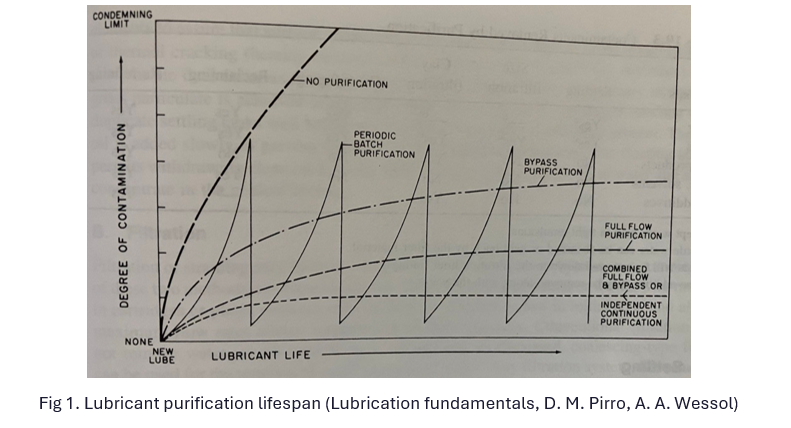
Onboard lubricant purification and filtration are critical tools in maximising the lifespan of lubricant onboard, as highlighted in the below graphical representation. 
 

As is the case with centrifugal fuel purifiers and systems, removing critical contaminants such as, water and insoluble oxidised molecules, is the key and core objective of lubricant oil purification systems.

The majority of onboard lubricant oil purification systems operate via a centrifugal separator with a continuous water outlet, controlled by a gravity disc, in addition to a filtration system. The gravity disc of choice should be setup to match the oil density, viscosity grade, separation temperature and flow rate through the purifier. More recent separator models can adjust the interface without the need of specific gravity disc selection.

Operationally, the temperature of the lubricant oil that is passed through the purifier is the key variable that should be controlled, matching the relevant equipment manufacturer guidelines. The higher the temperature, the better the separation efficiency of the system, resulting in more effective removal of large particles (> 6 µm), and water from the lubrication system.

In typical systems, an increase in separation temperature from 90˚C to 95˚Cresults in a 22% separator efficiency gain. The impact of this can be identified through pre and post lubricant purifier analysis, notably through Water Content (H2O (%m/m)), PQ Index and ISO 4406 cleanliness code.


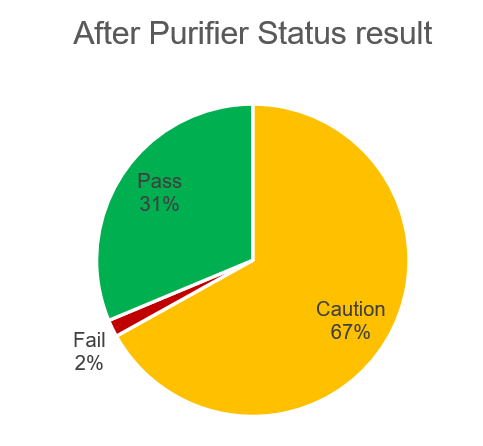
Reviewing VPS’ extensive database of lubricant testing data, the reported status of lubricant oil after purifier systems shows that over 2/3rds of all lubricant oils are at a caution or Alert/Fail status after purification.

The most common reasons for Caution or Alert results are due to:
•    Elevated Water content
•    PQ Index
•    Elevated Viscosity

This data shows that whilst vessels have purification systems onboard, steps and actions based upon oil analysis results are required to ensure effective purification is undertaken, resulting in the prolonged lifespan of the lubricant. Notably, for lubricating oil where the pre-purifier water content is analysed at levels above 0.20 %m/m, a measurable decrease should be observed.

Interpreting and acting on analysis results
Aside from severe cases of contamination occurring within the lubricant oil, the key properties that should be assessed to understand purifier efficiency are:
•    Water content (%m/m)
•    PQ Index
•    ISO 4406 PC code

Whilst some change in viscosity and Base Number may be witnessed, the removal of Water and free particles from the oil via the purifier is the most effective method to confirm acceptable purifier operation.

VPS recommends ISO 4406 Particle Counting (pre and post purifier) to be conducted to quantify the removal of different sized particles within the purifier and filtration system.

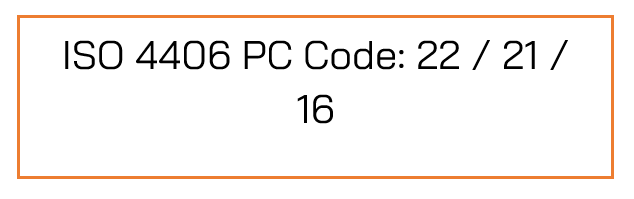
ISO 4406 Code:

The ISO 4406 Particle Count Code represents the logarithmic distribution and quantification of particles at different micron ranges, with differing equipment and oil cleanliness requirements based upon the application.


In the above example:

  • 22 represents total particles above or equal to 4 microns in size
    o    20,000 to 40,000 particles per mL
  • 21 represents particles above or equal to 6 microns in size
    o    10,000 to 20,000 particles per mL
  • 16 represents large particle above or equal to 14 microns in size
    o    320 to 620 particles per mL

Target ISO 4406 codes are set based upon application, with typical marine engines targeting between 20/18/15 to 22/20/17 cleanliness levels. These levels can and should be achieved through effective lubrication management and purification.

Due to the logarithmic nature of the ISO PC code, even a 1-2 quantification reduction can provide significant cleanliness benefits, as the most dangerous particles to engine and lubricant reliability are those greater than 6 microns in size. A 1-2 step reduction in Code 2 or 3 represents a halving, or quartering, of the total number of particles present that can cause further damage to engine components. When assessed against elemental analysis results, this can also provide an indication of the source of wear, which should be investigated and rectified.

Operationalising and monetising lubricant purifiers
Lubricant purifiers are a critical component in overall lubricant systems.

Therefore, provided the purifiers and filtration systems are operated effectively,
preventative maintenance strategies to extend component lifespan, reduce total lubricant consumption and minimise vessel operational expenditure, will be successful.

Key recommendations to optimise purifier performance:
•    Lubricant oil samples to be taken pre and post purification systems to assess separator efficiency, particle and water removal.
•    Separation temperature to be maximised where practically possible through the use of lubricant oil heaters, maintaining a temperature below 100˚C.
•    ISO 4406 Particle Count to be conducted, alongside elemental analysis for wear identification and reliability risk reduction.
•    Recurring contamination issues to be dealt with at source (i.e. fuel dilution based upon Vanadium detection for residual fuels).
•    Trending analysis and data aggregation to be captured and stewarded across vessels and fleets.

For further support and advice on improving vessel operations via lubrication performance and efficiency contact joe.star@vpsveritas.com


VPS’ “Biofuels Green Transition” whitepaper collaboration with North Standard and World Fuels Services

NorthStandard has published a new white paper focusing on the accelerating adoption of biofuels in commercial shipping. ‘Biofuels – Driving the green transition’ brings together insights from NorthStandard, supplier World Fuels and leading testing agency Veritas Petroleum Services (VPS), in a unique discussion document outlining biofuel uptake, potential issues and loss prevention measures.      

Many ship owner-operators who seek a drop-in solution to drive maritime decarbonisation are choosing biofuel blends. With regulation tightening, replacing conventional bunker fuels without major modifications to ship systems is appealing and low risk. Biofuel sample testing undertaken by VPS increased by a factor of 12 between 2021 and 2025, for example, to reach 1.2 million MT, last year. 

Read the whitepaper in full : Biofuels: Driving the Green Transition | NorthStandard | Marine Insurance


Introducing VeriSphere: Smarter Maritime Insights in One Digital Ecosystem

VeriSphere is a new digital ecosystem initiative from VPS, designed to transform how our customers in shipping and offshore energy markets access and utilise operational data.

The VeriSphere platform combines data from VPS fuel quality testing, bunker quantity surveys, and lube oil condition monitoring programmes to deliver quick and actionable insights. Through a suite of advanced data analytics solutions, VeriSphere offers fast and secure access to critical information across fuels, lubricants, emissions, and operational performance.

With VeriSphere, our customers are:
- Taking faster data-driven decisions
- Improving operational efficiency 
- Reducing operational expenses 
- Reporting their fuel consumption & emissions 

By connecting critical data streams within one platform, the VeriSphere ecosystem empowers our users with transparency and actionable insights required to navigate today’s complex maritime landscape.

One platform. One ecosystem. Smarter maritime insights.

Click here to watch the video and discover how VeriSphere is shaping the future of maritime insights.


VPS Round Table Meeting - Miami 3rd of June

Commercial Advantage Through Efficiency and Carbon Reduction

The First VPS Round Table Meeting of 2026 will take place on 3rd June 2026 at the Marriott Biscayne Bay in Miami.

Under the title, “Commercial Advantage Through Efficiency and Carbon Reduction”, VPS experts will be joined by other industry leaders from engine and additives manufacturers, in delivering thought-provoking presentations, which will generate insightful discussions, throughout this seminar.

Save the Date: Wednesday 3rd June 2026 and look to register for this free event by contacting neil.chapman@vpsveritas.com